The short answer
Yes, rabbits can eat spinach — as one green in a rotation, not as the base of the daily salad. Spinach sits on the House Rabbit Society's list of safe leafy greens, so the poisonous-plant worry is settled. The half of the answer most owners never hear is the other one: spinach is also one of the highest-oxalate vegetables measured in the food supply, and oxalate is the compound that makes rabbit-savvy vets treat spinach differently from romaine or basil.
- Safe part: fresh leaves and the thin stems, washed and served raw.
- Portion: a share of the day's leafy greens — not the whole bowl.
- Frequency: one or two servings a week is a comfortable rhythm for a healthy adult.
- Skip it for: a rabbit with a history of bladder sludge or urinary stones, kits under 12 weeks, and any rabbit in a gut episode.
- Never: creamed, buttered, salted, canned, or pickled spinach — and no spinach soup.
Everything below still runs on top of the hay-first structure: unlimited grass hay, a measured fresh portion, and a small pellet ration. Spinach changes none of that.
How much spinach can a rabbit eat?
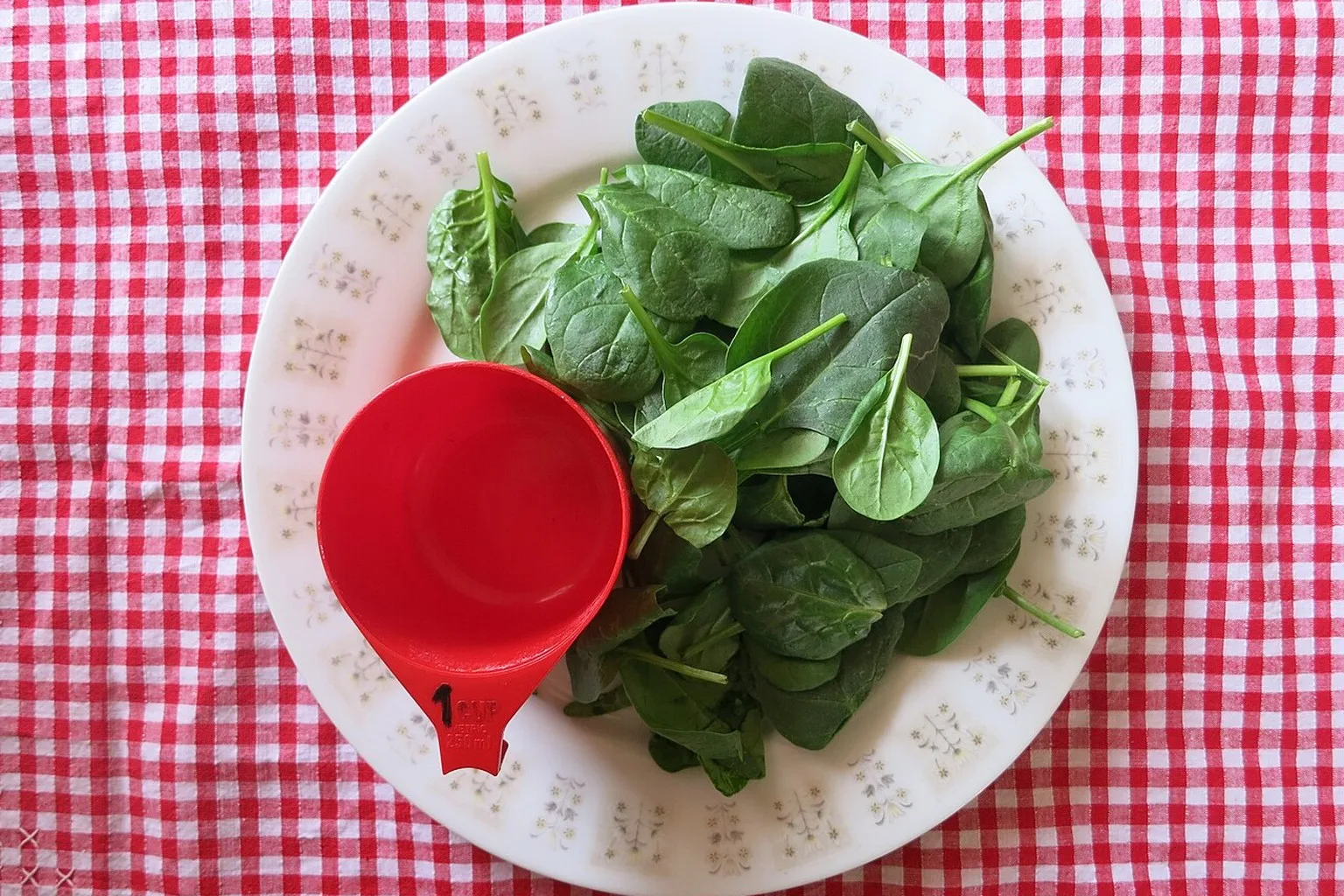
The published ceiling is for the whole fresh portion, not for spinach alone. The House Rabbit Society suggests roughly one cup of packed greens for every two pounds of rabbit, while PDSA describes the same portion as an adult-sized handful of leafy greens, vegetables and herbs, twice daily. Neither body gives a separate spinach number, so the second half of this table is our own conservative mapping: we keep spinach under about a quarter of the greens in any single bowl.
| Rabbit weight | Total leafy greens (published guide) | Spinach inside that bowl (this guide) | If spinach is the only green that day |
|---|---|---|---|
| 2 lb (small dwarf) | 1 cup packed | 2–3 leaves | About ¼ cup packed |
| 4 lb | 2 cups packed | 3–4 leaves | About ½ cup packed |
| 5 lb (typical adult) | 2½ cups packed | 4–5 leaves | About ⅔ cup packed |
| 8 lb | 4 cups packed | 6–8 leaves | About 1 cup packed |
| 10 lb+ (large breed) | 5 cups packed | 8–10 leaves | About 1¼ cups packed |
Wet, washed leaves weigh almost nothing, which is why leaf counts are a friendlier measure than grams at the bowl. Treat the leaf counts as a ceiling for the day rather than a target to hit, and remember that the same bowl is usually better built from several greens than from one.
How often should rabbits get spinach?
This is where spinach separates from everyday greens. The Rabbit Welfare Association & Fund lists spinach alongside kale, carrot tops, parsley and spring greens as vegetables high in calcium that are thought to predispose rabbits to urinary sludge, and advises limiting how much of them is offered. That is the reason spinach belongs in a rotation rather than in the daily bowl.
| Group | Greens | Place in the routine |
|---|---|---|
| Everyday base | Romaine and butterhead lettuce, basil, cilantro, mint, dill, fennel fronds | Most days, mixed rather than single-greens |
| Rotate, don't repeat | Spinach, kale, spring greens, carrot tops, parsley | One of them, once or twice a week, as a share of the bowl |
| Treat vegetables | Carrot, bell pepper, broccoli florets | Tiny pieces, counted inside the fresh portion |
| Low/moderate calcium picks | Celery, cauliflower, broccoli, carrots, Brussels sprouts | Useful when a vet has flagged urinary sludge or stones |
The low-calcium row is not our invention: those are the vegetables RWAF names when a rabbit has a sludge problem, alongside cutting out alfalfa for adults and commercial dried mixes. If your rabbit has ever passed thick, toothpaste-like urine, treat that list as the better default and let a vet set the plan.
Why oxalates matter
Oxalate is a naturally occurring plant chemical that binds minerals. The USDA's Agricultural Research Service describes it as reacting with calcium, iron and other minerals to inhibit their absorption, and in people it is the compound linked to kidney stones. Spinach carries more of it than almost any other salad crop.
| Measure | Finding | What it means for feeding |
|---|---|---|
| Oxalate across 310 spinach lines | 647.2–1,286.9 mg per 100 g fresh weight | Variety changes the number by roughly double |
| Low-oxalate lines found | 8 lines under 780 mg per 100 g | Even the lowest measured spinach is not a low-oxalate food |
| What oxalate does | Binds calcium and iron in the gut | Calcium in the leaf is not the calcium the rabbit keeps |
Two practical readings follow. First, 100 g of leaves is a small pile, not a portion any rabbit should see in one sitting — the concentration numbers are alarming only if the serving is large. Second, because the range is so wide, an owner cannot buy their way out of the problem by choosing a cleverer bag: every spinach you can buy is in the high-oxalate class.
Calcium, sludge, and stones
Rabbits handle calcium differently from most mammals. RWAF's veterinary-written guidance explains that rabbits absorb all of the calcium in their diet and rely on urinary excretion to remove the excess, passing roughly 44% of it out through the urinary tract. A thick, calcium-rich sediment in the bladder is therefore not a harmless quirk — RWAF states plainly that it is not normal, that it usually points to a diet too high in calcium and/or too little water intake, and that it predisposes the rabbit to cystitis and stones.
The predisposing foods RWAF names are exactly the greens a well-meaning owner is most likely to over-serve: alfalfa hay, calcium supplements, and high-calcium vegetables such as spinach, kale, parsley, carrot tops and spring greens. What to do instead is just as concrete:
- Keep grass hay ad lib — timothy or oat rather than alfalfa for adult rabbits.
- Serve every vegetable wet, and make sure water never runs out — including on freezing nights.
- Keep the litter tray reachable so urine is not held, and encourage movement and a healthy weight.
- Treat symptoms as a vet matter — straining, thick white urine, tooth grinding, or a hunched, pressing posture are not home-fix situations.
Which spinach, and how to serve it
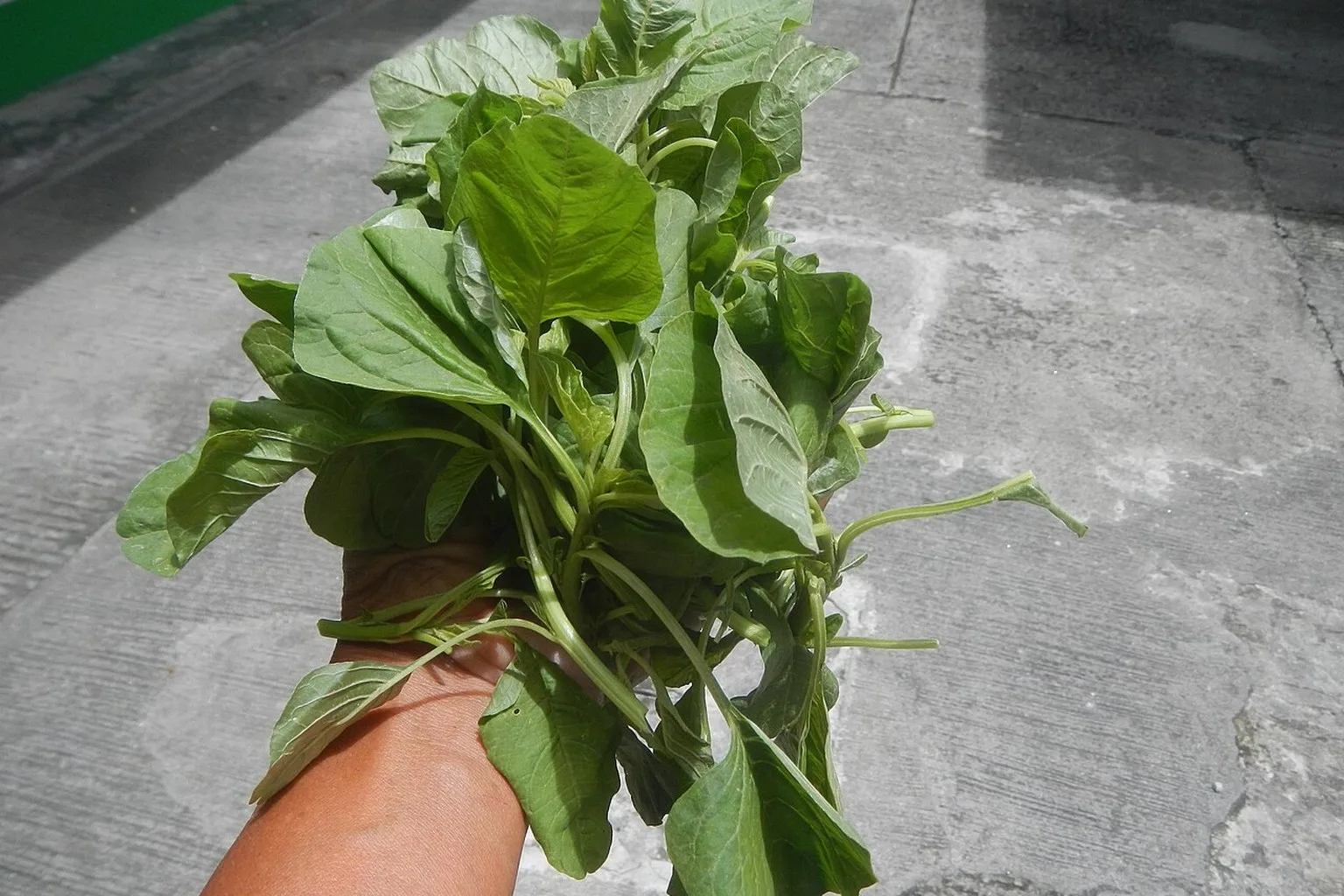
Spinach is sold in several forms and they are not interchangeable for a rabbit. The washing rule is not cosmetic either: with Rabbit Haemorrhagic Disease Virus type 2 circulating in some regions, the House Rabbit Society's vegetable guidance is to wash fresh produce for at least two minutes in a bowl of water, changing the water several times. Spinach is a leaf you feed raw, so it gets the full treatment.
| Form | Safe? | Notes |
|---|---|---|
| Fresh raw leaves, including baby leaf | Yes, in rotation | Wash two minutes in a bowl, changing the water; serve wet |
| Stems | Yes | Chop thick stems so they are not a choking-sized bolt of plant |
| Plain home-cooked spinach | Not needed | Adds nothing fresh leaves lack; if offered, keep it plain and small |
| Creamed, buttered, salted, or dressed spinach | No | Dairy, butter, salt and dressings are all unsuitable |
| Spinach soup, dip, or canned spinach | No | Stock, onion, garlic and salt are rabbit-unsafe |
| Wilted, slimy, or old leaves | No | If you would not eat it, it does not go in the bowl |
Introducing spinach safely
Every new green follows the same protocol, and spinach is a good example of why it exists. Rabbit.org's rule is to introduce one new vegetable at a time and then wait 24 hours to check for soft stools or gas before adding anything else, stopping the food entirely if either appears.
- Start with one leaf, mid-morning, on a day you will be home.
- Keep everything else steady — no new hay, pellets, or second vegetable that day.
- Watch the litter tray for 24 hours: droppings should stay round, firm and plentiful.
- Respect age: fresh vegetables wait until after 12 weeks, and kits get tiny amounts first.
- Pause during gut trouble — a rabbit with soft droppings, or one recovering from GI stasis, should not be trialling wet greens.
If your rabbit has never eaten vegetables at all, build the routine before adding spinach: the new greens guide sets the order, and the diet transition guide covers moving off a muesli mix without upsetting the gut.
What to feed on the other days
Spinach's job in a rabbit's week is variety — micronutrients and texture in a diet already built on hay. The rest of the week does not need another spinach substitute; it needs the ordinary structure, with the greens chosen from the everyday group in the rotation table above.
If you want to check a specific food before it goes in the bowl, the safe food checker covers the common ones, the safe foods library is the browsable version, and the diet planner converts your rabbit's weight into the day's actual numbers. The beginner diet guide explains the hay-first split, the hay comparison helps if you are choosing a new batch, and the cucumber and tomato guides show how the same portion arithmetic works for wet and sugary foods.
Kept that way, spinach is a useful green rather than a risk: a couple of washed leaves a week, inside the day's allowance, in a bowl built mostly from lettuces and herbs.
References and further reading
- Rabbit.org (House Rabbit Society): safe vegetables for rabbits — the safe leafy-greens list, the one-cup-per-two-pounds guide, the 24-hour introduction rule, and the two-minute wash guidance.
- USDA Agricultural Research Service: making spinach with low oxalate levels — the 647.2–1,286.9 mg per 100 g range across 310 spinach lines, and what oxalate does to mineral absorption.
- Rabbit Welfare Association & Fund: urolithiasis, urinary sludge and stones — rabbit calcium metabolism, the high-calcium vegetable list, and long-term dietary management.
- PDSA: feeding your rabbits — the twice-daily fresh-food portion, hay and pellet guidance.
Related resources
Diet & Nutrition
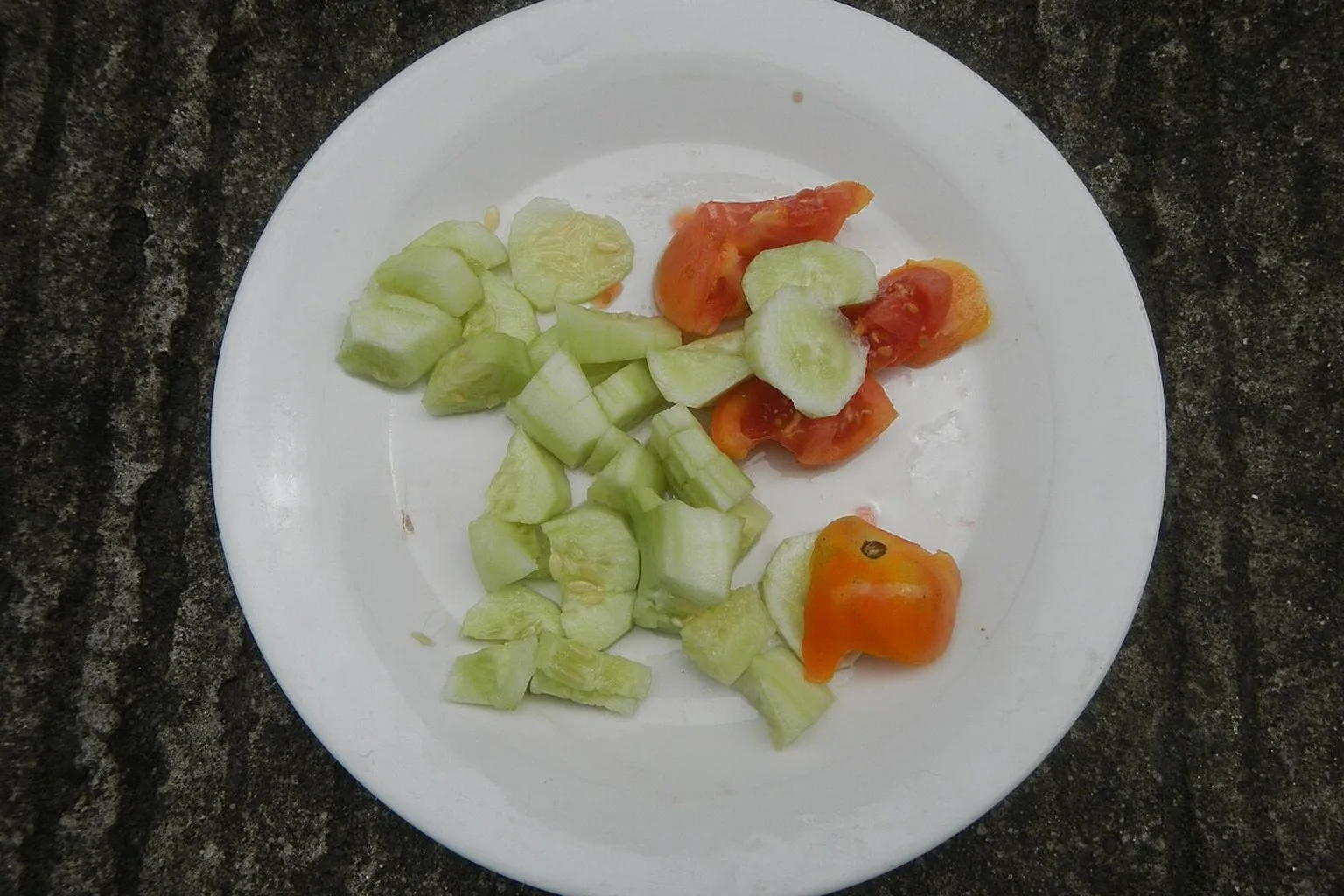
Can Rabbits Eat Cucumber? Water Content, Portions, and Peels
Cucumber is safe for rabbits in small pieces, but at roughly 96% water it stays a small extra. Portions by weight, plus peel, seeds, and leaves.

Diet & Nutrition
Can Rabbits Eat Tomatoes? Leaves, Green Parts, and Safe Amounts
Ripe fruit only, in tiny amounts — leaves, stems, and unripe tomatoes are not safe. Portions, first-feeding steps, and vet-source links.

Diet & Nutrition
Can Rabbits Eat Banana? Servings, Peels, and Risks
How much banana is safe, why the peel comes off, and how this sugary treat fits a hay-first diet — with vet-sourced portion tables.
Diet & Nutrition
How to Introduce New Greens Without Upsetting Digestion
Use a slow, observable process for adding herbs and leafy vegetables to a rabbit diet.