
The short answer
Rabbits can eat fully ripe tomato fruit — in small, occasional pieces. Ripe tomato flesh is a safe treat food. Everything else about the plant is a different story: the leaves, stems, and unripe green tomatoes contain solanine-family alkaloids that make animals sick, so tomato plants belong well out of a rabbit's reach.
That split — safe fruit, unsafe plant — is the fact this guide exists to make clear. It is also why tomatoes show up on both "safe" and "toxic" lists around the internet depending on which part of the plant the writer has in mind.
- Safe: fully ripe tomato fruit — small treats only.
- Never: leaves, stems, flowers, and unripe green tomatoes.
- Portion: a wedge or a cherry tomato, a couple of times a week at most.
- Also no: sauces, ketchup, sun-dried, and canned tomato products.
What parts of a tomato are safe?
Tomatoes are a nightshade-family plant, and the chemistry of that family explains everything about how to feed them:
| Part | Safe for rabbits? | Why |
|---|---|---|
| Fully ripe red fruit | Yes — small treats only | Watery, acidic, sugary enough to count as a treat food |
| Unripe green tomatoes | No | Still contain tomatine — the ASPCA's poison control guidance calls unripe tomatoes toxic |
| Leaves and stems | No | Solanine-family alkaloids; the plant itself is listed as toxic to pets |
| Flowers | No | Same plant chemistry, and no nutritional reason to offer them |
The ASPCA's animal poison control team explains the mechanism plainly: as a tomato ripens, its tomatine level drops dramatically, which is why the fully ripe fruit is safe while the rest of the plant never becomes safe. UK veterinary charity PDSA takes the same position from the garden side — it lists nightshade-family plants among those to keep pets away from entirely (PDSA poisonous plants guide).
One garden note while the rule is fresh: if you compost tomato scraps and your rabbit free-ranges outdoors, keep the compost covered. A determined rabbit samples anything within reach, and spoiled tomato scraps are exactly the part of the plant this page keeps saying no to.
In practice: never hand a rabbit a whole garden tomato — including the little green ones — and never offer tomato leaves thinking they are "just more greens." If your rabbit chews on a tomato plant, remove access, note roughly how much was eaten, and call your vet for advice the same day.

How much tomato can a rabbit eat?
Treat tomatoes like any other fruit-type treat: small, occasional, and counted against the day's treat budget. House Rabbit Society diet guidance caps fruit at about 1 teaspoon per 2 pounds of body weight per day, maximum — one of those ceilings most owners never need to approach.
Portions that fit that ceiling in real life:
- Small dwarf (2–3 lb): half a cherry tomato, or a thin wedge, once or twice a week.
- Average adult (4–6 lb): one cherry tomato, or a wedge of a larger tomato, a couple of times a week.
- Large breed (8–10 lb): up to two cherry tomatoes on a treat day.
Cut pieces small, wash the fruit first, and trim away the stem scar. The small seeds inside a ripe tomato are fine — portion size and ripeness are the things that matter. And because tomatoes are both watery and acidic, they can be loosening for sensitive rabbits: serve them on a normal day so a soft-stool reaction is easy to attribute, and slow down if droppings change. If your rabbit has never had tomato, introduce it alone: one small piece, then 24 hours of observation before anything else new.
If you notice yourself reaching for tomato more than twice a week, that is the signal to rotate in a different produce treat for a while — variety is how the daily treat budget stays small in practice.

Introducing tomato safely
Run the first feeding like a small experiment, because that is what it is:
- Confirm ripeness. Deep, even color — no green shoulders or pale patches, and nothing bitten from a garden plant you cannot identify.
- Wash and trim. Rinse the fruit like any produce the family eats, and cut away the stem end. Rabbits are extra sensitive to spoiled food, so "would I eat it?" is the bar.
- Serve one small piece. Half a cherry tomato for smaller rabbits; a full one for an average adult. Nothing else new that day.
- Watch for 24 hours. Soft stools or unusual gas mean pause treats for several days — the same rule that governs introducing new greens.
- Keep the total small. If tomato joins the rotation, it shares the fruit allowance with banana, apple, and berries — the banana guide works through the same arithmetic.
Stop if the first serving brings soft stools, unusual gas, or a rabbit that sits hunched after eating. New foods get one careful chance to prove themselves before they join the rotation.
What about sauces, ketchup, sun-dried tomatoes, and tomato soup? No. Processed tomato products concentrate sugar, salt, and acidity, and are often cooked with onion or garlic — all firmly on the avoid list in the beginner diet guide. If your rabbit sneaks a lick of tomato sauce, it is not a crisis; go back to hay, greens, and water, and check the Safe Food Checker before sharing anything else from a plate.
Tomatoes are the most confusing produce in the garden, but they are not the only plant with a safe-and-unsafe split — the safe foods library groups every common food by verdict, and the GI stasis guide explains why any food that upsets gut balance earns a pause rather than a repeat serving.
Related resources
Diet & Nutrition
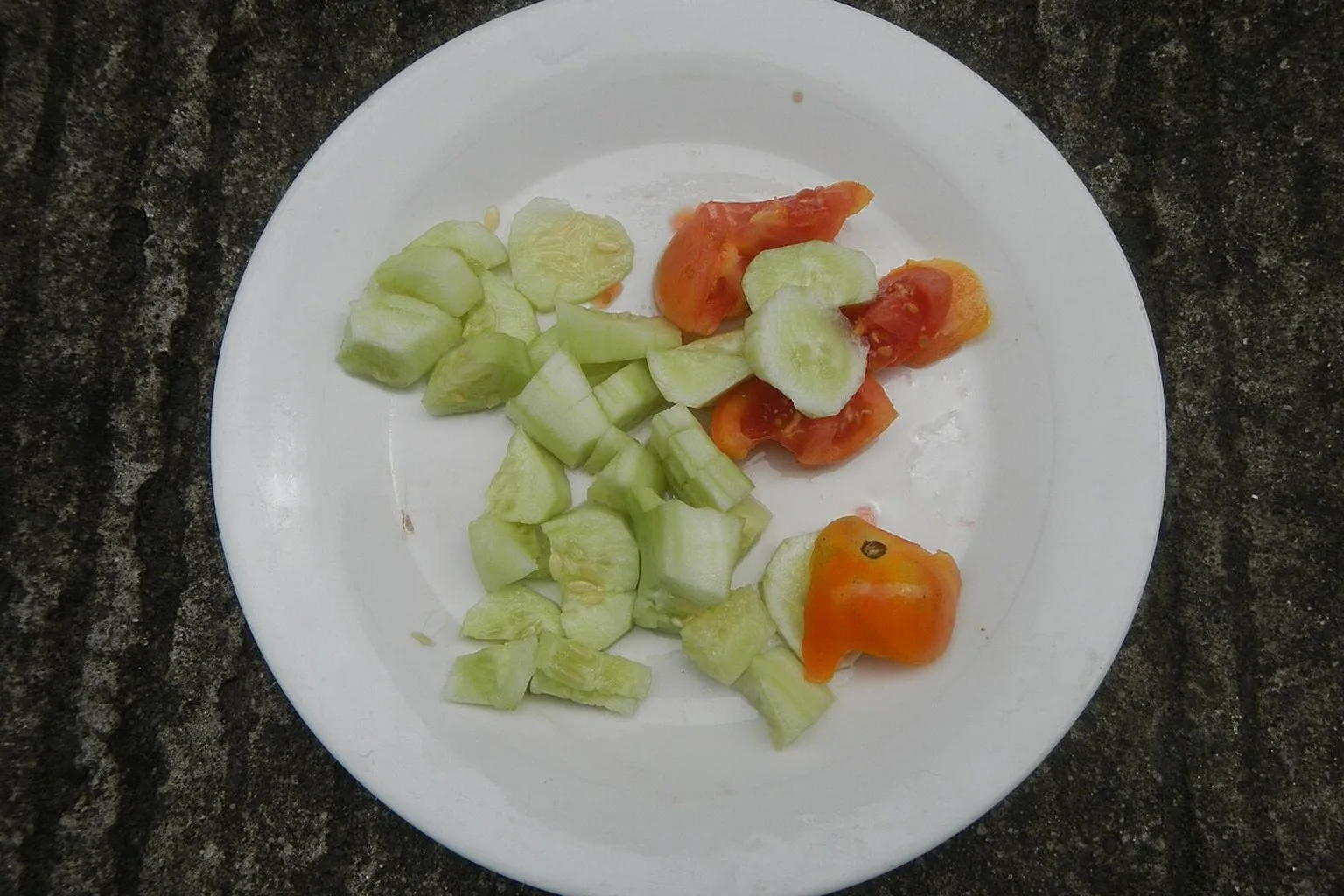
Can Rabbits Eat Cucumber? Water Content, Portions, and Peels
Cucumber is safe for rabbits in small pieces, but at roughly 96% water it stays a small extra. Portions by weight, plus peel, seeds, and leaves.
Diet & Nutrition
Can Rabbits Eat Mung Bean Sprouts? Portions, Washing, and Sprout Safety
Mung bean sprouts are on the House Rabbit Society safe list. How much to feed, why raw sprouts need cold storage and rinsing, and which sprout products to skip.
Diet & Nutrition
Can Rabbits Eat Persimmons? Ripe Fruit Only, Portions, and Tannins
Ripe persimmon flesh is a small rabbit treat: why unripe fruit is astringent, which varieties need to soften first, and how to keep fruit to treat size.
Diet & Nutrition
Can Rabbits Eat Spinach? Oxalates, Portions, and How Often
Spinach is safe for rabbits in a rotation, not a daily bowl: it is high in oxalates. Portions by weight, how often to offer it, and when to skip it.