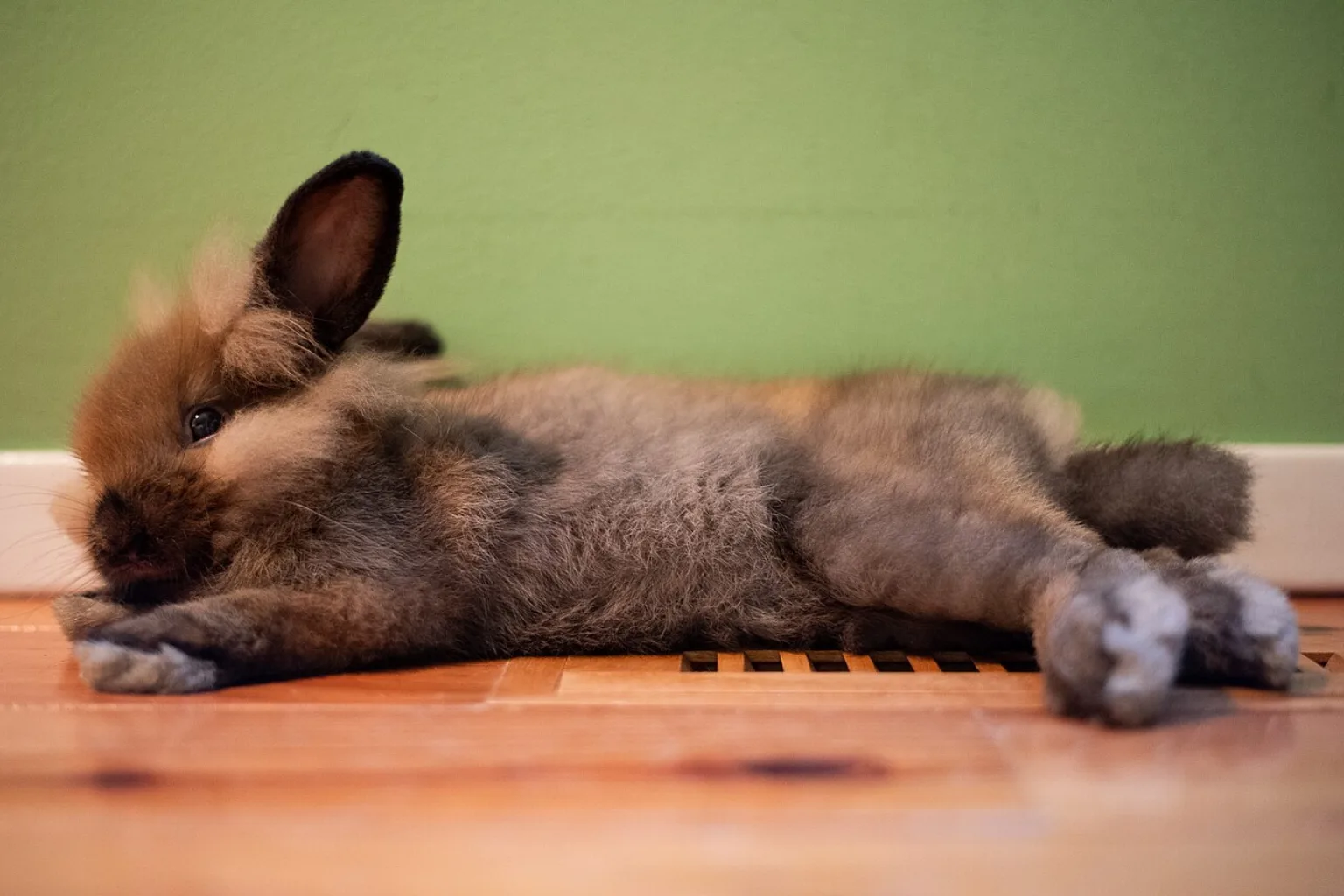
The short answer
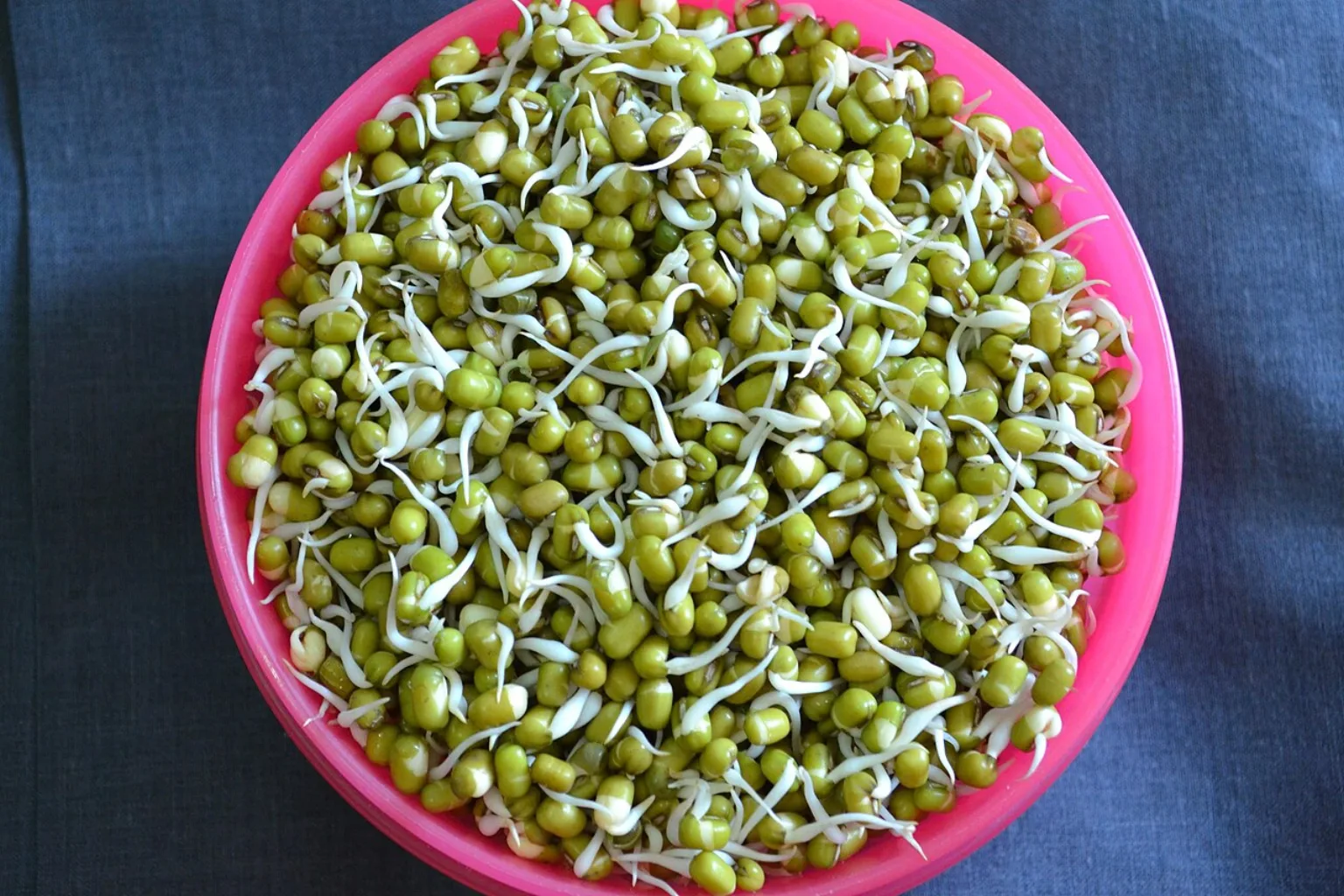
Yes, rabbits can eat mung bean sprouts, and they appear on the House Rabbit Society's list of safe leafy greens under their botanical name, Vigna radiata. The same list names alfalfa, lentil and pea sprouts. Nothing about the sprout itself is the problem. What decides how it goes is portion, freshness and rinsing, because a raw sprout is a warm-grown, wet food that spoils faster than a leaf of romaine.
- Safe part: fresh, chilled, crisp sprouts, rinsed and served damp.
- Portion: a share of the day's greens, never a bowl of its own.
- Frequency: one or two small servings a week suits most healthy adults.
- Skip it for: kits under 12 weeks, any rabbit in a gut episode, and any rabbit with soft droppings that day.
- Never: stir-fried, salted, pickled or dressed sprouts, and any sprout mix containing onion, garlic or a dressing.
Everything else stays as it was: unlimited grass hay first, a measured fresh portion, a small pellet ration. If your rabbit has never eaten fresh vegetables at all, build that habit first with the new greens guide, then add sprouts to the rotation.
How many sprouts can a rabbit eat?
The published allowance
The published numbers cover the whole fresh portion, not sprouts alone. The House Rabbit Society suggests roughly one cup of packed greens for every two pounds of rabbit, with leafy greens at about 75% of the fresh portion and other vegetables at around one tablespoon per two pounds. PDSA describes the same allowance as an adult-sized handful of leafy greens, vegetables and herbs twice daily and puts hay and grass at about 85% of the diet. RWAF states that fresh vegetables should make up only around 5 to 10% of a rabbit's daily diet, with unlimited hay and fresh grass as the foundation.
| Rabbit weight | Published greens allowance | Sprouts share (this guide) | What that looks like in the bowl |
|---|---|---|---|
| 2 lb (small dwarf) | 1 cup packed greens | About 1 tbsp | A pinch of sprouts worked through the leaves |
| 4 lb | 2 cups packed greens | About 1 to 2 tbsp | One small cluster, never a heap |
| 5 lb (typical adult) | 2.5 cups packed greens | About 2 tbsp | Sprouts as one of three or four items |
| 8 lb | 4 cups packed greens | About 3 tbsp | Still a side item beside the leaves |
| 10 lb and over (large breed) | 5 cups packed greens | About 4 tbsp | Half a small punnet at the very most |
How this table was built
The first two columns are the published guidance. The last two are our own working mapping, kept deliberately small: a sprout is a wet food that wilts in a bowl, and a small serving tells you far more about your rabbit's tolerance than a large one does.
Why washing and cold storage matter more here than with a leaf
Sprouts are grown in warm, damp conditions, which are also the conditions bacteria need. Health Canada's food safety guidance for sprouts states that sprouts can sometimes be contaminated with harmful bacteria such as E. coli and Salmonella, and sets out the controls that matter with a raw sprout: buy only refrigerated sprouts, choose crisp ones, avoid sprouts that look dark or smell musty, refrigerate them as soon as you get home, rinse them in cool running water, and throw away anything past its date or that has lost its crispness.
That guidance is written for people rather than rabbits, so read it as the reason a sprout needs more care than a lettuce leaf, not as a reason a rabbit cannot have one. The House Rabbit Society's feeding guidance covers the same ground from the rabbit's side: serve vegetables wet, and never serve a spoiled vegetable, because rabbits can be even more sensitive to spoiled food than people are.
The sprout rules to follow at home
- Buy chilled, keep chilled. If the shop sold them warm from a display crate, leave them there.
- Rinse and serve damp. Cool running water, then straight into the bowl.
- Keep the serving small. A small serving is eaten before it warms up and wilts.
- Bin the leftovers. Limp, dark or musty sprouts are waste, not a bargain.
- Hold off during gut trouble. A rabbit with soft droppings should not be trialling a wet green that day.
Which sprouts, and which to skip
The House Rabbit Society's safe list names the sprout types directly, which makes this part unusually simple. Anything that is not on a safe list, and anything cooked, salted or dressed, stays out of the bowl.
| Sprout or product | On the safe list? | Feeding note |
|---|---|---|
| Mung bean sprouts (Vigna radiata) | Yes, listed as a leafy green | The common supermarket sprout; a small share of the bowl, rinsed |
| Alfalfa sprouts | Yes, listed | Very fine and easy to drag through a bowl; mix with coarser leaves |
| Lentil sprouts | Yes, listed | Slightly firmer than mung bean sprouts |
| Pea sprouts | Yes, listed | Readily eaten; count them inside the fresh portion |
| Radish sprouts and radish tops | Yes, both listed | Peppery, so keep the amount small |
| Broccoli, mustard or onion sprout mixes | Not listed as sprouts | Broccoli and mustard greens are listed as vegetables; onion and garlic are not rabbit-safe at all |
| Cooked, canned or pickled sprouts | No | Heat, salt, vinegar and oil are all wrong for a rabbit |
| Sprouted seed mixes sold for birds or reptiles | No | Not a rabbit food; usually includes seeds and dried fruit |
| Slimy, dark or musty sprouts | No | Spoiled produce is a hard no for rabbits |
One shopping note: sprout punnets are commonly sold in mixed salad topper packs that contain onion, garlic or a dressing. Read the label rather than the picture, and if the pack is a mix, it is not a rabbit food.
Introducing sprouts safely
Every new food follows the same protocol, and the reason is specific. The House Rabbit Society's rule is to introduce one new vegetable at a time and wait 24 hours to check for soft stools or gas before adding another, stopping that food entirely if either appears, because a gut upset in a rabbit can escalate into stasis. Kits wait: fresh vegetables start after 12 weeks, in amounts under half an ounce.
The first serving
- Day one: a single small pinch of sprouts, mid-morning, on a day you will be home.
- Keep everything else steady. No new hay, no new pellets, no second vegetable that day.
- Watch the litter tray for 24 hours. Droppings should stay round, firm and plentiful.
- Increase only if nothing changed. A slightly bigger pinch next time, not a bowl.
- Stop at the first soft stool. Take the sprouts out, keep hay and water in front of the rabbit, and call a rabbit-savvy vet if the droppings stay wrong.
If your rabbit has never had a gut upset, that does not make this step optional. A rabbit that stops eating, passes few or no droppings, or sits hunched needs a vet the same day; the GI stasis guide explains what to look for while you are on the phone.
What to feed on the other days
Sprouts earn their place as variety: a wet, crunchy item inside a hay-first diet, not a food group. The rest of the week stays the same, with the salad built from the everyday greens and sprouts rotated in once or twice.
To check a food before it goes in the bowl, the safe food checker covers the common ones, the safe foods library is the browsable version, and the diet planner turns your rabbit's weight into the day's numbers. For the same portion arithmetic on other fresh foods, see the cucumber guide for a high-water vegetable, the spinach guide for a rotation green, and the beginner diet guide for the overall structure.
Kept to that shape, mung bean sprouts are a useful small green: fresh, rinsed, a spoonful or two at a time, inside the day's allowance.
References and further reading
- Rabbit.org (House Rabbit Society): vegetables and fruits for rabbits: the safe list naming mung bean, alfalfa, lentil, pea and radish sprouts, the one cup per two pounds guide, the one new vegetable per day rule with a 24 hour wait, the wash and serve-wet guidance, and the 12 week age minimum.
- Rabbit Welfare Association & Fund: recommended vegetables and herbs: fresh vegetables at around 5 to 10% of the daily diet, leafy greens as the majority of that portion, brassicas in moderation, and the fruit treat list.
- PDSA: feeding your rabbits: hay at around 85% of the diet, the twice-daily adult handful of greens and herbs, and the one tablespoon nugget ration.
- Health Canada: food safety tips for sprouts: the bacteria risk in raw sprouts and the shopping, chilling, rinsing and discarding rules.
Related resources
Diet & Nutrition
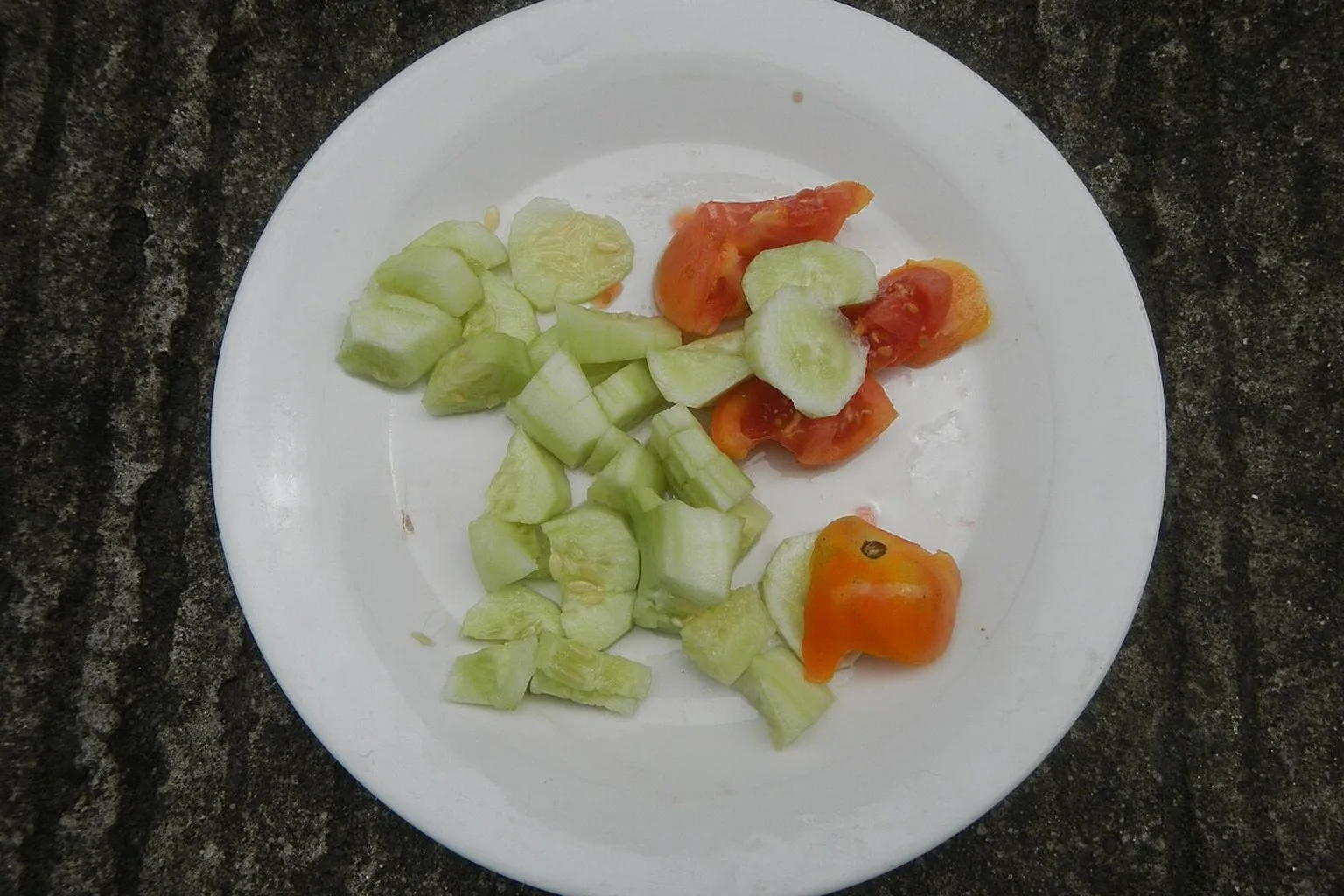
Can Rabbits Eat Cucumber? Water Content, Portions, and Peels
Cucumber is safe for rabbits in small pieces, but at roughly 96% water it stays a small extra. Portions by weight, plus peel, seeds, and leaves.
Diet & Nutrition
Can Rabbits Eat Persimmons? Ripe Fruit Only, Portions, and Tannins
Ripe persimmon flesh is a small rabbit treat: why unripe fruit is astringent, which varieties need to soften first, and how to keep fruit to treat size.
Diet & Nutrition
Can Rabbits Eat Spinach? Oxalates, Portions, and How Often
Spinach is safe for rabbits in a rotation, not a daily bowl: it is high in oxalates. Portions by weight, how often to offer it, and when to skip it.

Diet & Nutrition
Can Rabbits Eat Tomatoes? Leaves, Green Parts, and Safe Amounts
Ripe fruit only, in tiny amounts — leaves, stems, and unripe tomatoes are not safe. Portions, first-feeding steps, and vet-source links.