The short answer
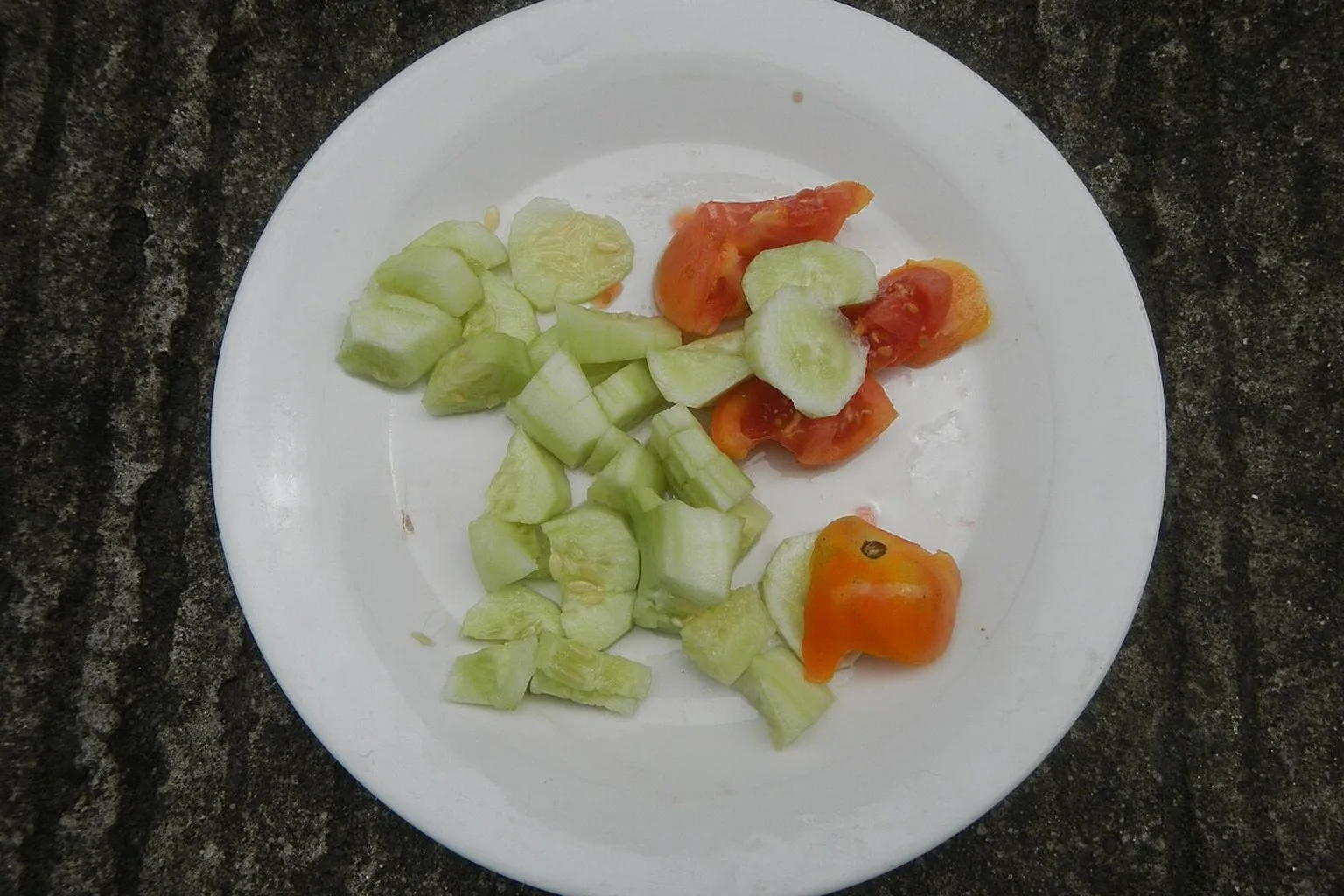
Yes, rabbits can eat cucumber — in small pieces, as an occasional extra. Cucumber flesh is low in sugar and low in calories, which makes it one of the safest treat vegetables you can offer. The catch is water: cucumbers are about 96% water, and a vegetable that wet adds very little nutrition while it does add bulk to a gut that already has a hay and greens routine to follow. So cucumber is a small extra, not a food group.
- Safe part: the flesh, peeled or unpeeled, cut into rabbit-sized slices.
- Portion: a few thin slices at a time — counted inside the day's non-leafy vegetable allowance.
- Frequency: a couple of times a week is plenty for a healthy adult.
- Also safe: cucumber leaves, which are a leafy green rather than a treat.
- Never: pickled cucumber, cucumber salad with dressing, or anything salted.
Everyday feeding still runs on unlimited grass hay, a measured portion of leafy greens, and a small pellet ration. Cucumber slots in beside that structure — it never replaces any of it.
How much cucumber can a rabbit eat?
Two respected numbers frame the answer, and they are both portion ceilings rather than targets. The House Rabbit Society puts non-leafy vegetables at no more than about 15% of the diet, or roughly one tablespoon per 2 pounds of body weight per day, while Rabbit.org suggests about one cup of packed greens per 2 pounds of body weight for the leafy portion. Cucumber is a non-leafy vegetable, so the tablespoon rule is the one that governs it.
| Rabbit weight | Non-leafy veg ceiling | Rough cucumber equivalent | Leafy greens guide |
|---|---|---|---|
| 2 lb (small dwarf) | 1 tbsp | 3–4 thin slices | 1 cup packed |
| 4 lb | 2 tbsp | 6–8 thin slices | 2 cups packed |
| 5 lb (typical adult) | 2½ tbsp | 8–10 thin slices | 2½ cups packed |
| 8 lb | 4 tbsp | 14–16 thin slices | 4 cups packed |
| 10 lb+ (large breed) | 5 tbsp | 18–20 thin slices | 5 cups packed |
The ceiling is shared, and that is the part owners miss. If cucumber is on the plate, it draws from the same non-leafy allowance as carrot, bell pepper, and broccoli that day — it is not an extra stacked on top. UK veterinary charity PDSA frames the same idea from the other direction: an adult-sized handful of leafy greens, vegetables and herbs twice daily, with the treat portion adjusted out of that day's meal rather than added to it.
Is cucumber actually good for rabbits?
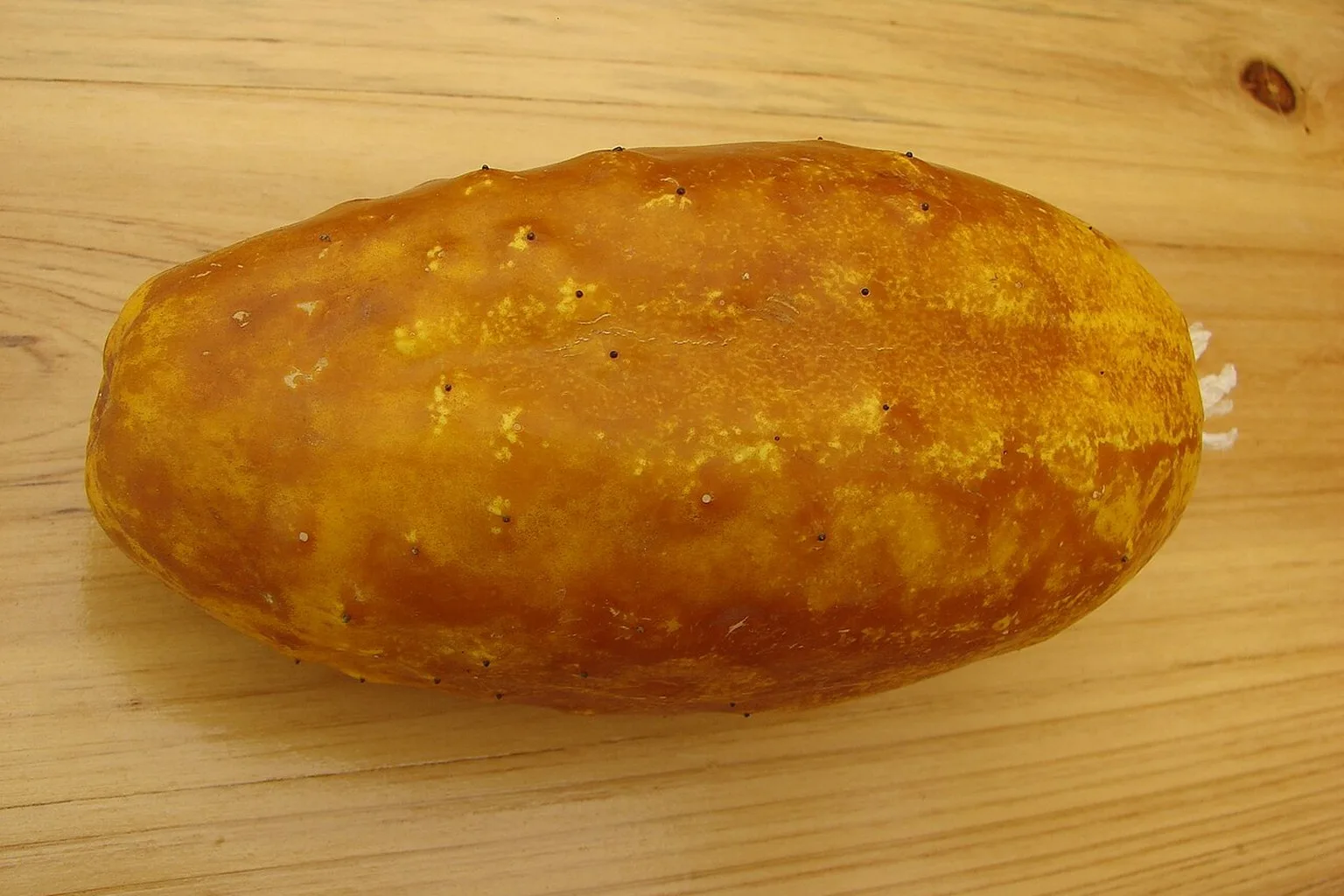
Cucumber is best understood as a low-risk filler rather than a nutrient source. North Carolina State University's Cooperative Extension notes that cucumbers are made up of about 96% water, which is exactly why a portion this wet can help a rabbit that drinks sparingly — and why it can loosen droppings in a rabbit that gets too much of it.
Rabbit.org makes the practical link explicit: vegetables with a high water content can cause diarrhoea and runny stool, so they belong in small, measured servings. That matters more than most owners expect, because a rabbit's gut runs on fibre, not water volume. Hay keeps the digestive tract moving; cucumber mostly adds moisture to a system that already handles hydration well.
The upside is real, though. For a rabbit that is well hydrated and healthy, a cool slice of cucumber is a low-sugar, low-calorie enrichment food — a far better training treat than a piece of fruit, and a good choice for a rabbit that is carrying a little extra weight. It is also a useful food to offer wet, which Rabbit.org recommends for rabbits that need more liquid in their day.
What parts of a cucumber are safe?
Cucumber is unusual because almost every part of the plant a rabbit might reach is either safe or harmless. The exceptions are all about what humans add to it.
| Part | Safe? | What to know |
|---|---|---|
| Flesh | Yes — small amounts | Low sugar, low calorie, about 96% water; the everyday safe part |
| Peel | Yes, if washed | Scrub or wash it first; leaving it on keeps the fibre and some vitamins that peeling removes |
| Seeds | Yes | Soft and harmless in a normal slice — no need to scoop them out |
| Leaves (the plant's leaves) | Yes — as a leafy green | The House Rabbit Society lists cucumber leaves among safe leafy greens |
| Vine and stems | No | Garden foliage is not rabbit food; keep growing plants out of reach |
| Pickled, salted, dressed | No | Vinegar, salt, onion, and dressings are all unsuitable for rabbits |
Washing is not optional. The House Rabbit Society recommends washing all fresh vegetables and scrubbing hard ones, and adds a specific reason: because of Rabbit Haemorrhagic Disease Virus type 2 (RHDV2), vegetables should be washed for at least two minutes in a bowl, changing the water several times. Cucumber is usually eaten with the peel on, so it gets the full treatment.
Introducing cucumber safely
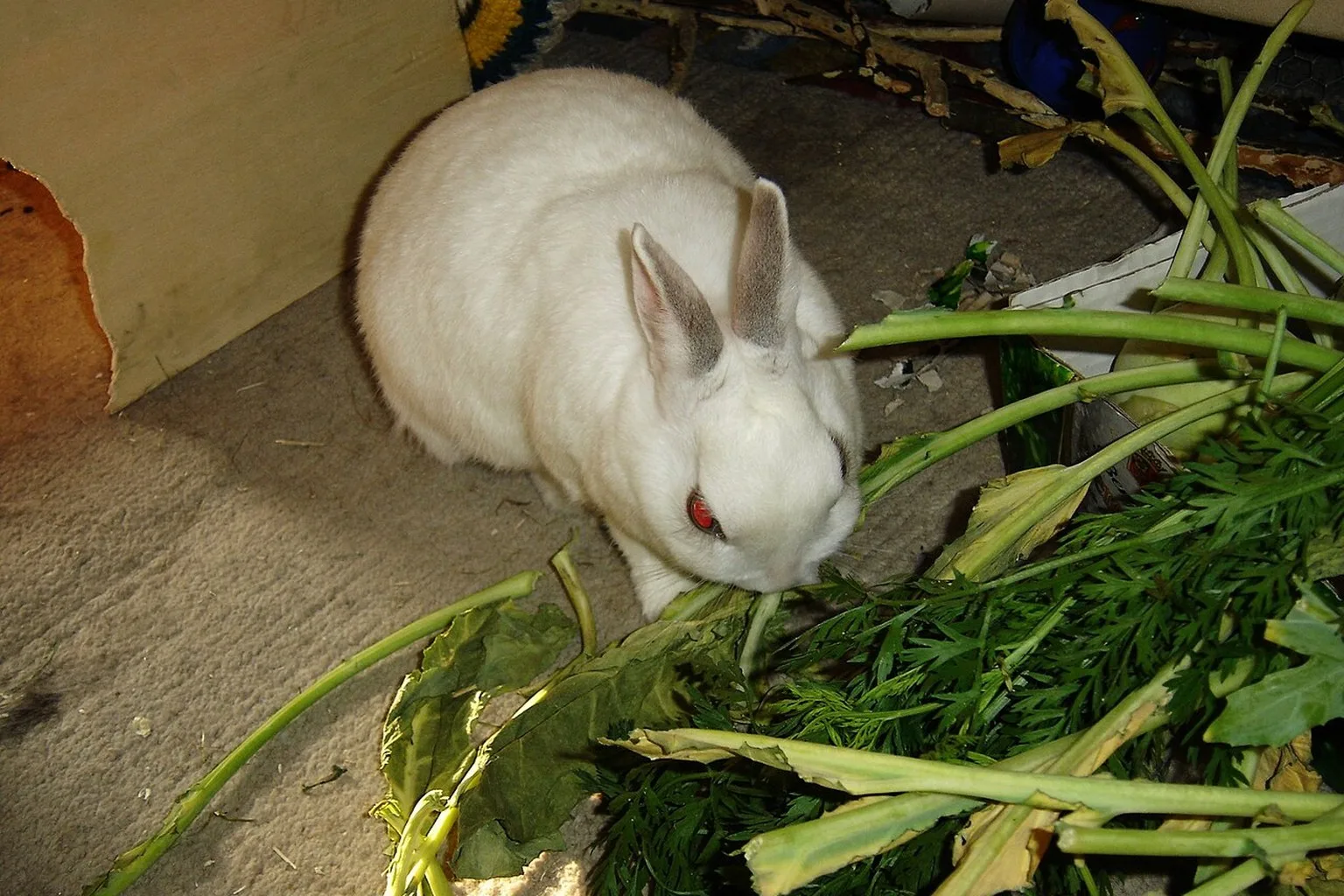
New foods go in one at a time, and cucumber is no exception. Rabbit.org's rule is to introduce a single new green, then wait 24 hours to check for soft stools or gas before adding anything else — and to stop the food entirely if either appears. The same caution is why introducing new greens is a process rather than a shopping list.
- Start small: one thin slice, mid-morning, when you will be home.
- Watch the litter box: droppings should stay round and firm; soft or watery output means stop.
- Keep everything else steady: no new hay brand, pellets, or other vegetables on the same day.
- Respect age: fresh vegetables wait until after 12 weeks of age, and kits get only tiny amounts at first.
- Skip it during gut trouble: a rabbit with a soft stool episode, or one recovering from GI stasis, should not be trialling new wet vegetables.
If your rabbit has never eaten vegetables at all, work through a greens routine first — the transition to a healthy diet guide sets out the order, and the diet planner turns your rabbit's weight into the day's actual numbers.
When cucumber is the wrong choice
Cucumber is safe for most healthy adult rabbits, but it is not the right food in every situation:
- Ongoing soft droppings. Adding a high-water vegetable to a gut that is already loose works against you. Fix the fibre first.
- A rabbit that will not eat hay. Cucumber is filling without being fibrous. If hay intake is dropping, the treat is the problem, not the solution.
- Weight loss or illness. A rabbit under veterinary care needs calories and protein, not water bulk. Follow your vet's plan.
- Any rabbit on a strict dental or GI protocol. Ask your rabbit-savvy vet before adding anything new.
Used well, cucumber is one of the easiest safe vegetables to keep in the rotation: cheap, low sugar, quick to slice, and popular with most rabbits. Keep it small, keep it inside the day's allowance, and let hay stay the food your rabbit actually lives on. The safe food checker can confirm the rest of your list, and the banana and tomato guides show how the same portion arithmetic works for sweeter foods.
References and further reading
Read the beginner diet guide for the hay-first structure, then check the hay comparison if you are choosing a new batch, and the GI stasis guide so you know what a droppings change is telling you.
- House Rabbit Society: healthy rabbit diet — portion rules for hay, vegetables, pellets, and treats.
- Rabbit.org: safe vegetables for rabbits — the safe list, plus the high-water-content caution.
- Rabbit.org: rabbit diet and nutrition — the 85% hay / 10% vegetable split.
- PDSA: feeding your rabbits — twice-daily fresh food guidance and safe vegetable list.
- NC State Cooperative Extension: cucumber nutrition — the 96% water figure.
Related resources

Diet & Nutrition
Can Rabbits Eat Tomatoes? Leaves, Green Parts, and Safe Amounts
Ripe fruit only, in tiny amounts — leaves, stems, and unripe tomatoes are not safe. Portions, first-feeding steps, and vet-source links.

Diet & Nutrition
Can Rabbits Eat Banana? Servings, Peels, and Risks
How much banana is safe, why the peel comes off, and how this sugary treat fits a hay-first diet — with vet-sourced portion tables.
Diet & Nutrition
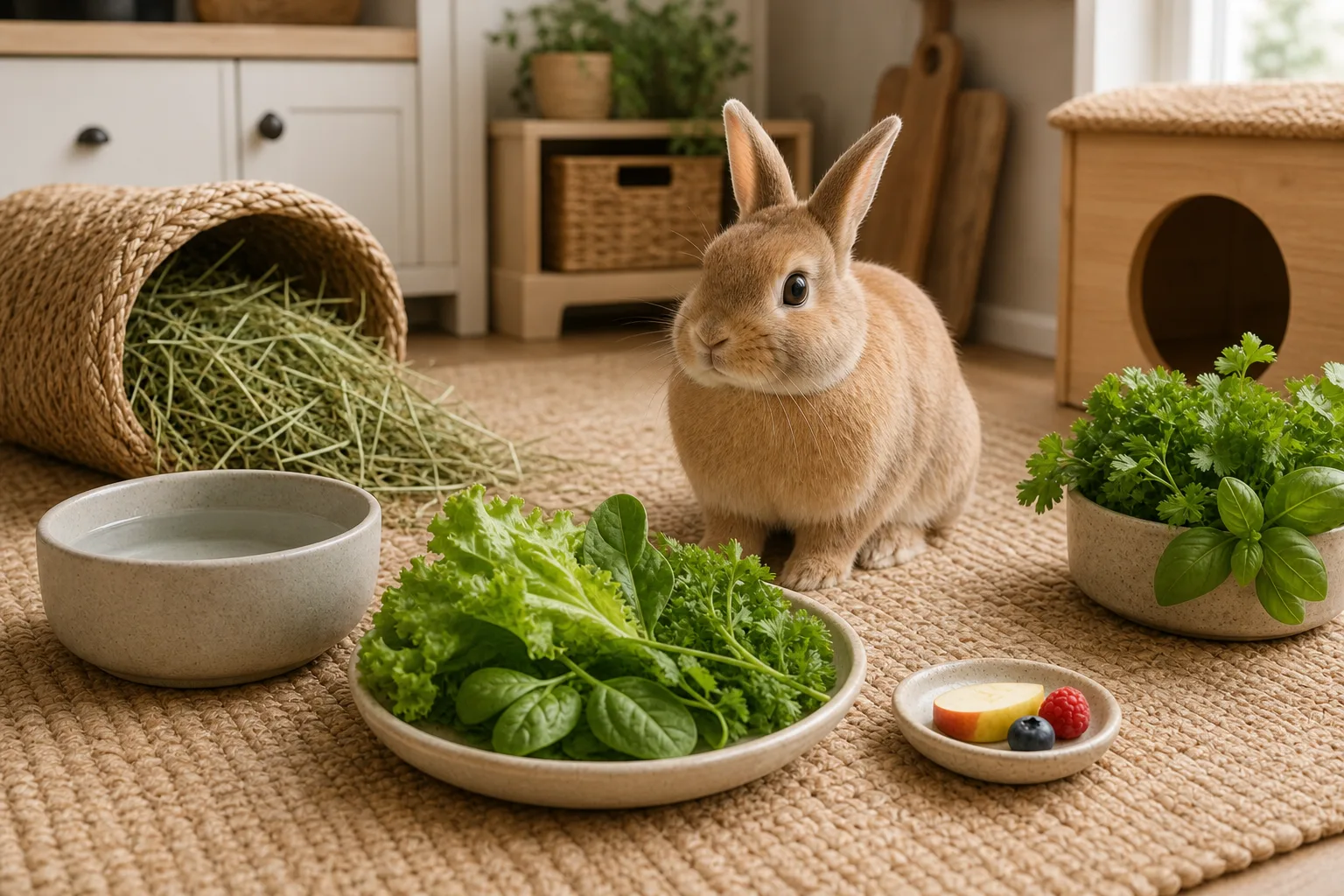
How to Introduce New Greens Without Upsetting Digestion
Use a slow, observable process for adding herbs and leafy vegetables to a rabbit diet.
Diet & Nutrition
Timothy vs Orchard vs Meadow: Choosing the Best Hay for Rabbits
How timothy, orchard, meadow, and oat hays compare on fiber, calories, and pickiness, plus how to store hay and switch types without upset.