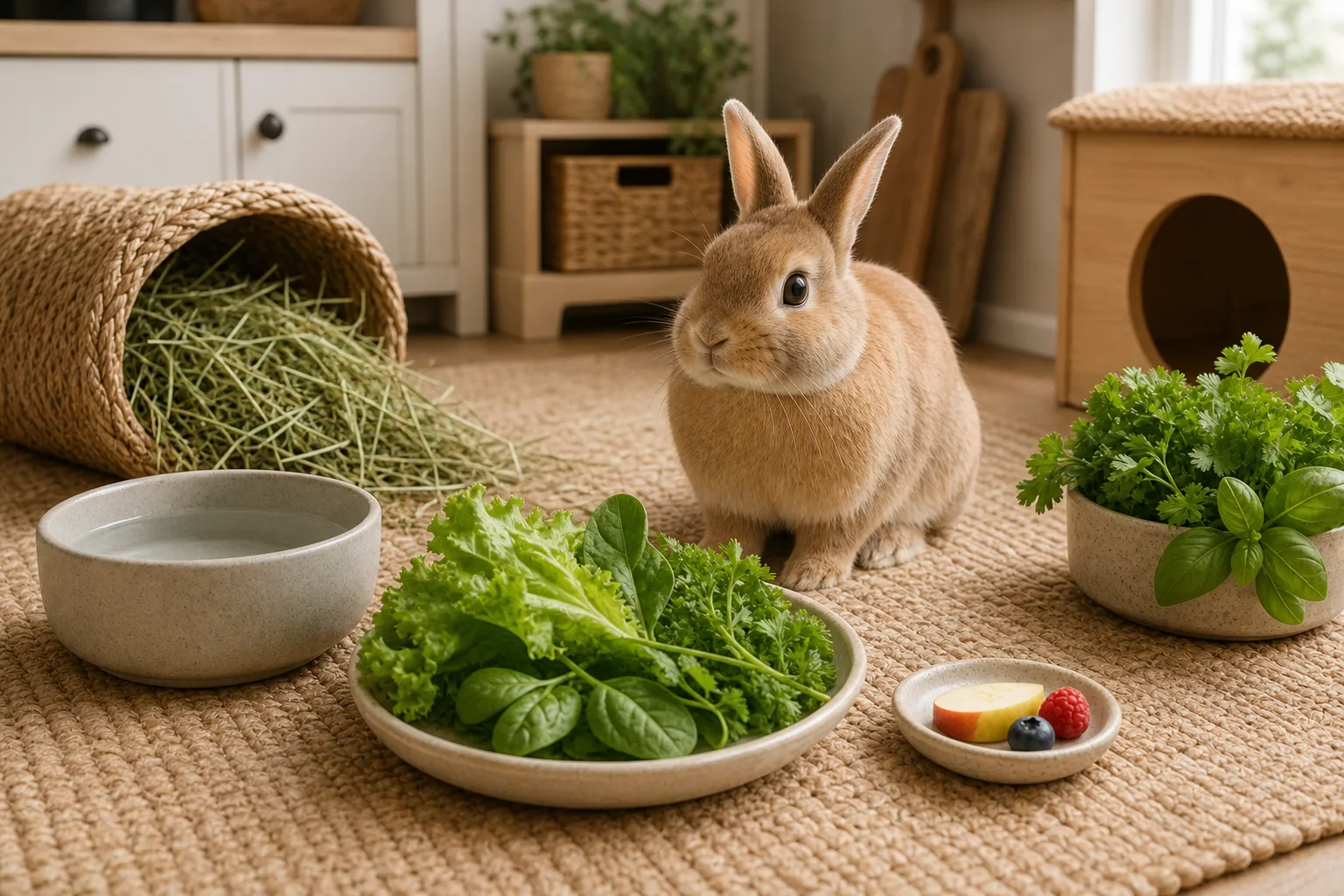
Overview
Diet transitions should be slow enough that the gut has time to adapt. This guide is written for beginners and intermediate rabbit caregivers who want practical steps without panic or guesswork.
Use it as an educational checklist, then adapt the details to your rabbit's age, health, personality, and local veterinary guidance. If a rabbit seems unwell, especially if eating or droppings change, professional care comes first.
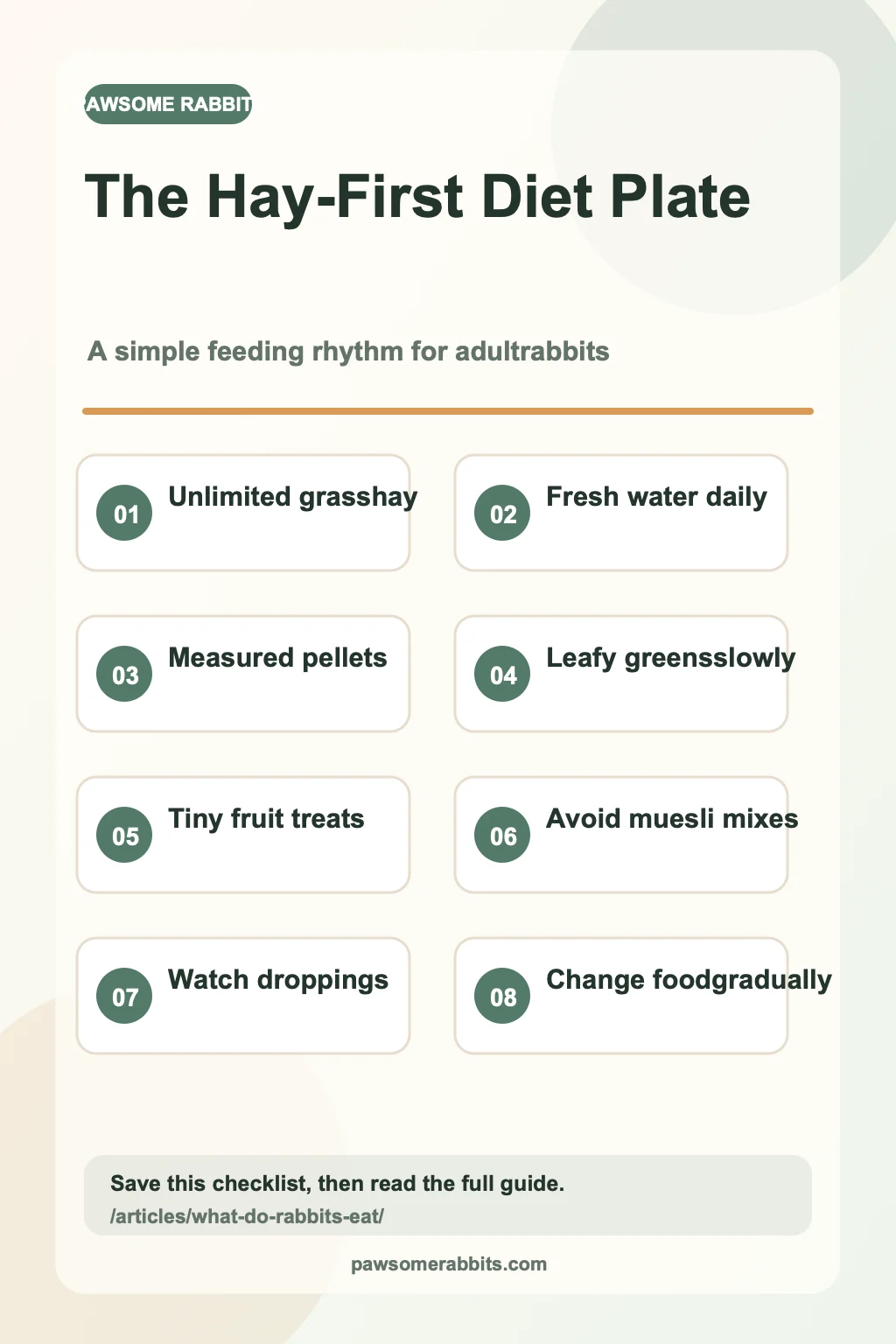
Step-by-step care plan
1. Increase hay access before reducing familiar foods.
Start with the visible part of the problem, then make the safest choice easy to repeat. In practice, "increase hay access before reducing familiar foods." means checking the rabbit's normal pattern, making the change small enough to observe, and keeping notes when health, diet, or behavior may be involved. This sits within Diet & Nutrition because the detail matters: a rabbit that is safe, fed consistently, and given enough choice is easier to understand.
2. Measure pellets so changes are visible and consistent.
Make this step boring and consistent. Rabbits benefit from predictable care more than dramatic changes. In practice, "measure pellets so changes are visible and consistent." means checking the rabbit's normal pattern, making the change small enough to observe, and keeping notes when health, diet, or behavior may be involved. This sits within Diet & Nutrition because the detail matters: a rabbit that is safe, fed consistently, and given enough choice is easier to understand.
3. Remove muesli-style mixes gradually rather than overnight unless a vet advises otherwise.
Look for evidence: appetite, droppings, posture, energy, chewing patterns, litter habits, or willingness to explore. In practice, "remove muesli-style mixes gradually rather than overnight unless a vet advises otherwise." means checking the rabbit's normal pattern, making the change small enough to observe, and keeping notes when health, diet, or behavior may be involved. This sits within Diet & Nutrition because the detail matters: a rabbit that is safe, fed consistently, and given enough choice is easier to understand.
4. Introduce one green at a time in small amounts.
Keep the environment doing most of the work. Barriers, placement, traction, and routine beat constant correction. In practice, "introduce one green at a time in small amounts." means checking the rabbit's normal pattern, making the change small enough to observe, and keeping notes when health, diet, or behavior may be involved. This sits within Diet & Nutrition because the detail matters: a rabbit that is safe, fed consistently, and given enough choice is easier to understand.
5. Track droppings, appetite, and energy through the transition.
Review the result after a few days and adjust one variable at a time. In practice, "track droppings, appetite, and energy through the transition." means checking the rabbit's normal pattern, making the change small enough to observe, and keeping notes when health, diet, or behavior may be involved. This sits within Diet & Nutrition because the detail matters: a rabbit that is safe, fed consistently, and given enough choice is easier to understand.
Common mistakes to avoid
- Throwing away all old food on day one. Adjust the setup or routine before blaming the rabbit; most rabbit-care problems improve when the environment becomes clearer and safer.
- Adding several greens while also changing pellets. Adjust the setup or routine before blaming the rabbit; most rabbit-care problems improve when the environment becomes clearer and safer.
- Treating fewer droppings as normal adjustment. Adjust the setup or routine before blaming the rabbit; most rabbit-care problems improve when the environment becomes clearer and safer.
Safety notes
Rabbit care has health and safety edges. Appetite loss, no droppings, severe lethargy, obvious pain, head tilt, breathing difficulty, wounds, diarrhea, heat stress, or sudden collapse should be treated as urgent. This site is educational and cannot diagnose or treat a rabbit.
For context, this guide connects to Diet & Nutrition, Rabbit Diet Planner, Safe Food Checker, and glossary terms such as Grass Hay, Pellets, Muesli, Greens.
Related resources
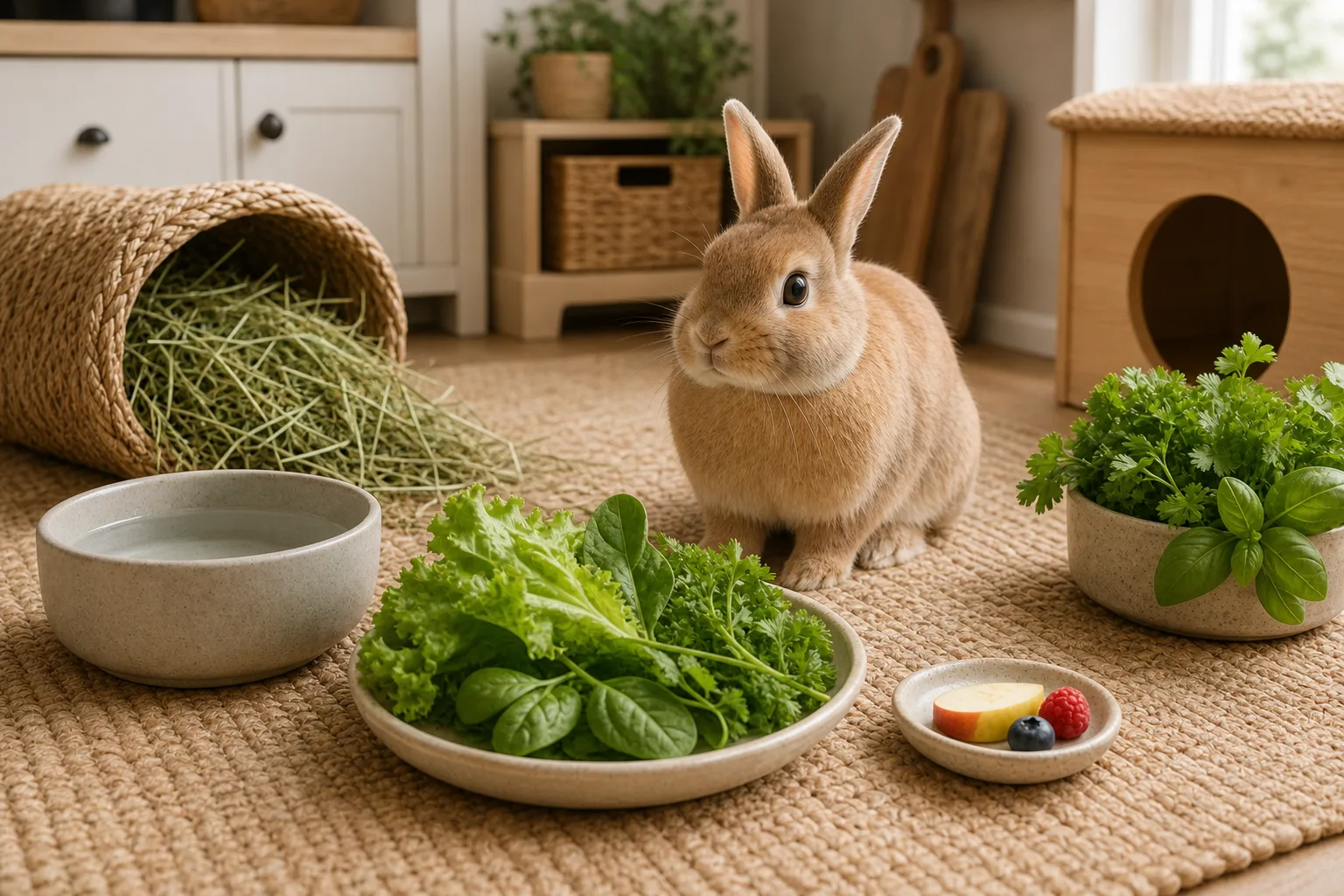
Diet & Nutrition
What Do Rabbits Eat? A Calm Beginner Diet Guide
The hay-first plate explained: daily amounts of hay, greens, pellets and treats by rabbit weight, sourced to Rabbit.org and PDSA guidance.
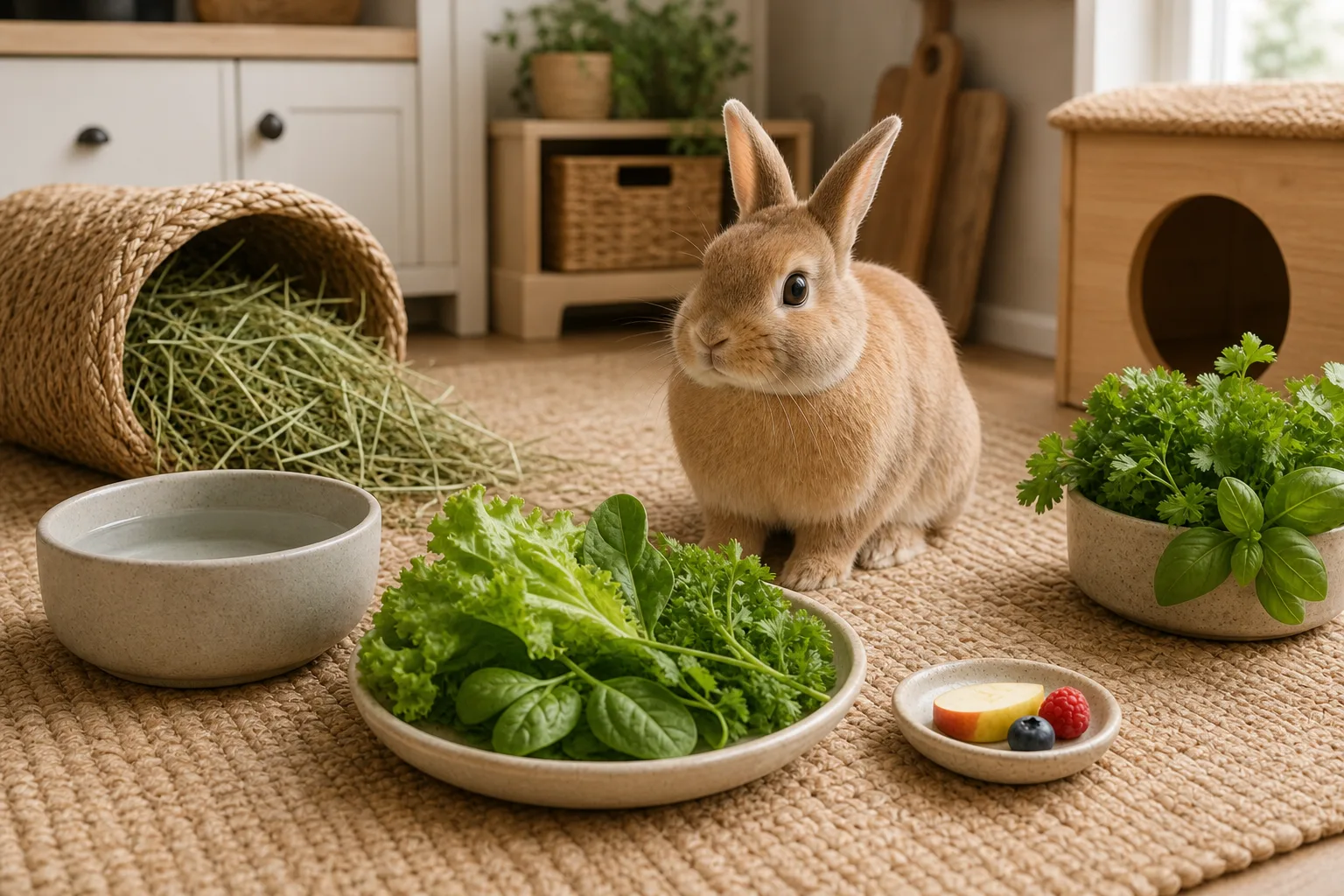
Diet & Nutrition
How to Introduce New Greens Without Upsetting Digestion
Use a slow, observable process for adding herbs and leafy vegetables to a rabbit diet.
Diet & Nutrition
Timothy vs Orchard vs Meadow: Choosing the Best Hay for Rabbits
How timothy, orchard, meadow, and oat hays compare on fiber, calories, and pickiness, plus how to store hay and switch types without upset.

Diet & Nutrition
Can Rabbits Eat Banana? Servings, Peels, and Risks
How much banana is safe, why the peel comes off, and how this sugary treat fits a hay-first diet — with vet-sourced portion tables.