The short answer
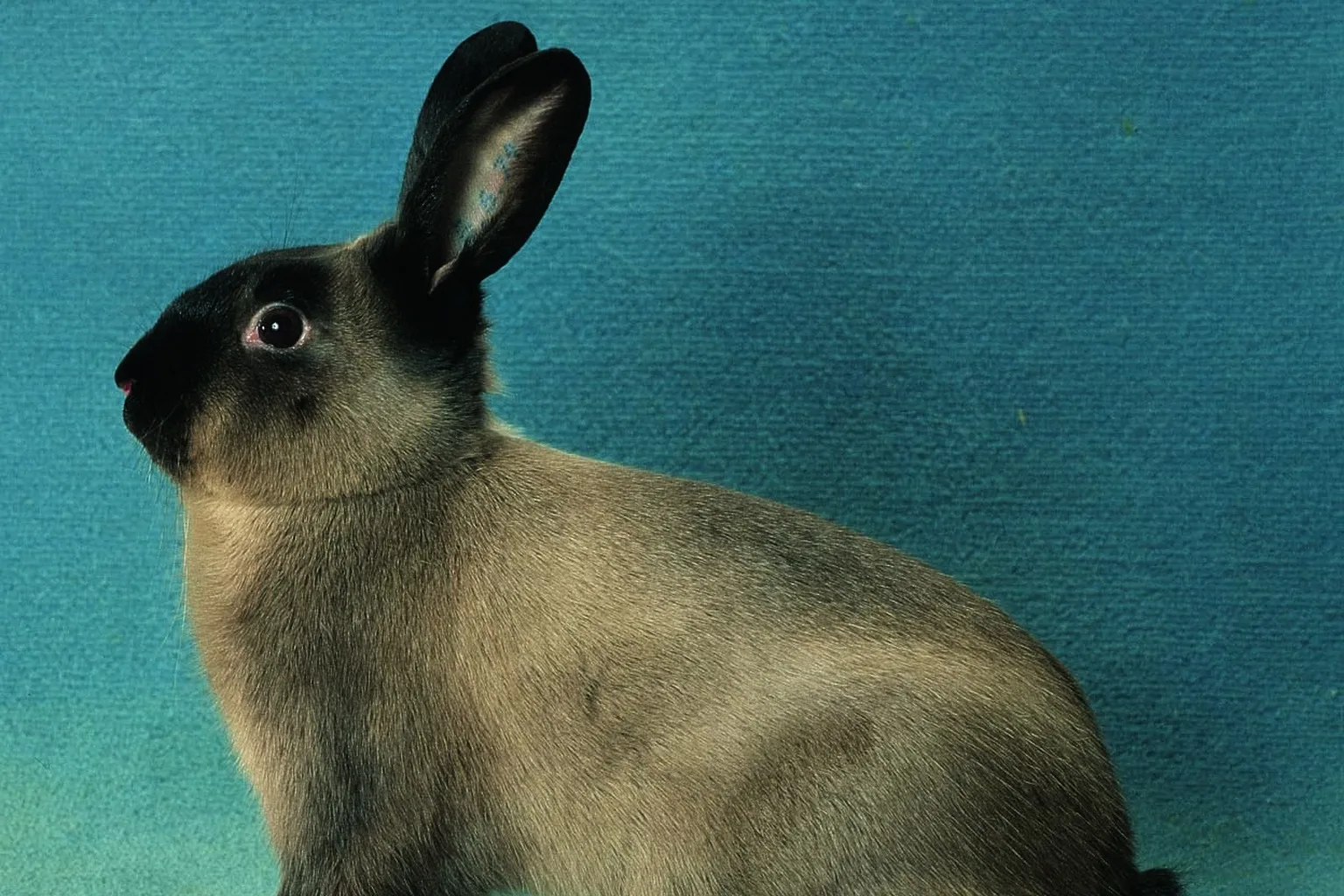
The American Sable is a medium-sized, quietly tempered rabbit with a coat that fades from deep sepia over the back to pale tan on the flanks — the same body as a Chinchilla rabbit in a different colour. That is the whole breed in one sentence. It is not a dwarf, it is not a high-maintenance coat, and it is not a fragile rare breed: it is a solid 7–9 lb commercial-type rabbit that needs the ordinary things done well.
- Size: the American Rabbit Breeders Association lists a maximum weight of 9 lb; breed references commonly describe adults at 7–10 lb, with does at the heavier end.
- Coat: dark sepia on the head, ears, feet, back and the top of the tail, fading to a lighter tan across the rest of the body. Breed references compare the shading to a mink or a Siamese cat, and describe the eyes as dark with a ruby hue.
- Build: commercial type — medium length, deep and wide, identical in conformation to the Chinchilla, which is the breed it descends from.
- Temperament: generally calm and easy to handle, which is why it is a popular show and 4-H breed.
- Lifespan and care level: the same as any well-kept indoor rabbit (roughly 8–12 years), with weekly brushing and a yearly vet check as the baseline.
If you were choosing purely on ease of care, the Sable would not be a compromise: the real consequences of the size are space, litter-box volume, and how much hay disappears each week.
What an American Sable looks like
The ARBA's own breed description is the clearest starting point: the American Sable has a brown coat that shades from a dark sepia over the top to a lighter shade of sepia over the sides, with a dark sepia face, ears, feet and tail, often compared to a mink in colour. Nothing about the body shape is unusual — this is a colour variety on a Chinchilla frame, not a separate build.
Breed histories trace the line back to coloured throwbacks — kits that did not match the Chinchilla standard — in the herd of Otto Brock of San Gabriel, California, in 1924. Breeders kept selecting the shaded rabbits rather than discarding them, and the result was a breed whose whole identity is its coat pattern.
Two practical points follow from that:
- The colour is the point of the breed, not a health signal. A sepia-shaded coat is a coat pattern. It says nothing about how healthy or hardy the rabbit is.
- Sable-pattern rabbits are bred under other names elsewhere. German breeders have long kept marten-coloured rabbits as the Marderkaninchen, with the same deepening over the back and fading to the flanks. If you are reading about the pattern rather than the American breed specifically, that name will find you more photographs.

Size, weight, and how the breed compares
At 9 lb the American Sable sits in the middle of the medium breeds, but "medium" covers a wide span. The Chinchilla family alone runs from 7.5 lb to 12 lb, which matters when you are buying a pen, a carrier or a litter box sized for "a rabbit".
| Breed | ARBA maximum weight | What that means at home |
|---|---|---|
| Standard Chinchilla | 7.5 lb | Smallest of the family; a 24-inch-wide pen feels generous |
| American Sable | 9 lb | Needs a litter box and carrier rated for medium breeds, not dwarfs |
| American Chinchilla | 12 lb | Giant-adjacent housing and flooring decisions |
| Holland Lop (for scale) | 4 lb | Less than half the Sable's weight — the reason "rabbit-sized" products vary so much |
Growth follows the usual rabbit curve: fastest in the first three months, adult weight somewhere between 8 and 12 months. Because rabbits hide weight loss well, the reliable habit is hands-on — run your palms down the ribs and spine each week. Ribs you can feel under a thin cover are correct; a spine like a ridge means a vet visit, not a diet change.
Lifespan is the same as for any pet rabbit, and wider than most new owners expect: the House Rabbit Society puts a well-cared-for indoor rabbit at seven to ten or more years, while the RVC's VetCompass study of 6,349 pet rabbits recorded an average age at death of 4.3 years. Our lifespan guide breaks the data down breed by breed.
Temperament and living with one
Breed descriptions and owner reports agree on the outline: the American Sable is generally docile, enjoys other rabbits' company, sleeps a good deal of the day, and warms to its owner on its own terms. Annoyed, it grunts and thumps a hind foot rather than escalating.
What that means in practice is that you are not getting a lap animal. You are getting a rabbit that will accept calm handling, prefer floor-level company, and do best with a routine it can predict. The first-30-days checklist covers the settling-in sequence, and the body language basics are worth reading before you decide a quiet rabbit is a cuddly one.
Because it is a gregarious breed, consider a pair: two rabbits share litter habits and keep each other company, but they are close to double the cost. The companionship guide covers what changes.
Coat care, molting, and the hairball rule
The Sable's short, dense coat is the easy kind, which is exactly why it gets neglected. The House Rabbit Society's grooming guidance is that rabbits need brushing at least weekly, with daily sessions once a heavy shed starts — and it explains why that matters more in rabbits than in cats: rabbits groom like cats but cannot vomit, so swallowed fur can build into a mass that blocks the stomach outlet.
Most rabbits shed on a three-monthly or seasonal rhythm, alternating light sheds with heavy ones. On a Sable the shed is less visible than on a long-haired breed, which is a reason to brush on a calendar rather than on appearance.
- Weekly baseline: five minutes with a soft brush or a damp hand, working backwards from the tail.
- During a molt: daily, plus a damp-hand pass over the flanks where loose fur collects.
- Remove the fur you collect from the pen and rugs, and never bathe a rabbit to fix shedding — that fur takes hours to dry.
- Watch hay intake through the molt. Fiber is what moves ingested fur through the gut, so a molt week is the worst week to cut back on hay.
Our grooming basics and shedding and molting guide cover the full routine and the warning signs that mean the shed is actually a skin problem.
Health watch-outs for a medium breed
There is no breed-specific disease list attached to the American Sable, and that is worth saying plainly: the risks that matter are the risks of being a rabbit, and two of them are weight-related. A 9 lb rabbit loads its hocks harder than a 4 lb one, and the House Rabbit Society warns that wire-bottom cages "can ulcerate a rabbit's feet" — sore hocks. The same weight also means obesity arrives quietly, with knock-on pressure on joints, gut and skin.
| When | What to check | Why it earns its place |
|---|---|---|
| Every morning | Hay eaten overnight, water, droppings in the box | Appetite and droppings are the two fastest illness signals a rabbit gives you |
| Weekly | Brush, feel the ribs and spine, check the hocks and the underside | Catches weight change, sore hocks and matted fur before they become a vet visit |
| Weekly | Look at the front teeth, ear canals, eyes and nails | The House Rabbit Society lists these as part of routine grooming for every rabbit |
| Monthly | Weigh on kitchen scales, trim nails if needed | A 5% weight change is hard to see and easy to measure |
| Yearly | Rabbit-savvy vet: teeth, weight, heart, feet, coat | Dental disease and molar spurs develop long before a rabbit stops eating |
The emergency rule is unchanged by breed: a rabbit that stops eating, passes few or no droppings, or sits hunched and grinding its teeth needs a vet the same day, not tomorrow. Our GI stasis guide and not-eating guide cover what to look for while you are on the phone.
Feeding and housing a 9 lb rabbit
Feeding a medium breed is not different in kind from feeding a dwarf; it is different in quantity. Unlimited grass hay stays the base, the fresh portion scales with body weight, and pellets stay a measured supplement rather than the meal. The diet planner converts your rabbit's weight into the day's numbers, and the beginner diet guide explains the hay-first split if you are starting from scratch.
Two numbers matter when you buy hay by the bag. A rabbit eats roughly its own body volume in hay daily, so a 9 lb Sable goes through it at close to double the rate of a Holland Lop. And the fresh portion follows weight: PDSA's guide of about one cup of packed greens per two pounds of rabbit puts a 9 lb rabbit at four to five cups a day.
Housing is where the size shows up most: pen space, litter box size, the carrier you can lift on a vet day and bowl capacity all scale with the rabbit. Run your planned setup through the enclosure size checker before committing, and keep every surface solid — wire and bare slippery flooring are the fastest route to sore hocks in a heavier rabbit. The indoor housing guide covers flooring, hides and litter placement.

The Chinchilla connection
The American Sable exists because of the Chinchilla — and the ARBA says as much: the Chinchilla can be credited with the development of more breeds and varieties of rabbit worldwide than any other breed of domestic rabbit: same frame, same commercial body type, different coat.
The breed's later history is a lesson about rare breeds: the population fell through the 1970s, and it was the breeders who cared about the colour — the American Sable Rabbit Society, formed in 1982 — who kept the line going. Today it is small but not at risk.
If you like the look but not the rarity, the full breed directory lists every ARBA-recognised breed with maximum weights, including the Chinchillas and Silver Martens that share the Sable's shaded ancestry.
How to find one
American Sables turn up in three places: dedicated breeders, 4-H and show circuits, and occasionally rescues. Rescue is always worth a phone call — purebreds land in shelters too, and an adult tells you its personality on day one.
If you go to a breeder, ask the questions that expose whether the rabbits are pets or units:
- Are the parents on site? Temperament is inherited, and you want to meet the adults.
- Any history of dental or foot problems? Ask directly; the honest answer is often "no, but we check".
- Will they take the rabbit back? Responsible breeders do.
- Have they been handled? A rabbit picked up correctly from weaning is a calmer pet at two years old.
Whatever the source, the first purchase is not a hutch: it is a pen the rabbit can move in, a litter box it can lie down in, and an appointment with a rabbit-savvy vet for a baseline check.
References and further reading
- American Rabbit Breeders Association: recognised breeds — the American Sable's coat description, the mink comparison, the 9 lb maximum weight, and the Chinchilla's role in developing other breeds.
- House Rabbit Society: how to care for a pet rabbit — indoor housing expectations, minimum space, why wire floors ulcerate feet, and the seven-to-ten-plus year lifespan of a well-kept rabbit.
- House Rabbit Society: grooming tips — weekly brushing as a minimum, the shedding rhythm, hairball risk (rabbits cannot vomit) and why mats must never be cut out with scissors.
- PDSA: feeding your rabbits — the twice-daily fresh-food portion and the hay-first structure used to size the numbers above.
Related resources
Rabbit Care Basics
Rabbit Breeds A-Z: All 53 ARBA Breeds With Sizes and Pet Notes
Every ARBA-recognized rabbit breed in one table with maximum weights and what each is known for, plus how to choose a breed for your home.
Rabbit Care Basics
New Rabbit Owner Checklist: The First 30 Days
A calm, practical first-month checklist for setting up your rabbit's space, diet, vet plan, and daily rhythm.
Rabbit Care Basics
Male vs Female Rabbits: Behavior, Health, and Which to Adopt
How male and female rabbits actually differ — hormones, health risks, lifespan data, and spay/neuter timing — and how to choose at adoption.

Rabbit Care Basics
What Does a Rabbit Cost Per Year? A Full Breakdown
Real numbers for rabbit costs — setup, hay, greens, pellets, vet care, and insurance — plus a monthly calculator to budget your own rabbit.