The short answer
A rabbit that stops eating is having an emergency, not a fussy day. Rabbits are grazing animals whose gut expects food to keep moving through it, so a slow gut is not a small problem that can wait for a convenient appointment.
- If the appetite goes or the droppings stop, contact a rabbit-savvy vet now. That is the Rabbit Welfare Association & Fund's instruction, and it adds that waiting until tomorrow may be too late.
- Twelve hours is the outer edge. The House Rabbit Society says that if a rabbit stops eating or producing faeces for 12 hours or more, treat it as an emergency and get to a rabbit-savvy vet immediately.
- There is no home remedy worth trying first. PDSA states that a rabbit which stops eating completely is at risk of gut stasis, a blockage, dehydration and liver disease, and that treating a rabbit at home is not advisable unless a vet has advised it.
This guide covers what changes when a rabbit stops eating, how to tell an emergency from a same-day problem, what to check while you arrange the appointment, the mistakes that make things worse, and the routine that keeps a gut moving in the first place.
Why a rabbit cannot skip a meal
A dog can miss a meal and be fine; a rabbit cannot. The Royal Veterinary College's exotics service notes that gut stasis — a slowdown or stop in the contractions that move food through the stomach and intestines — is the most common reason rabbits are presented to its hospital, and describes it as a sign of illness, pain or stress rather than a disease itself.
The mechanism explains the urgency. The House Rabbit Society describes the caecum, the fermentation chamber at the end of the gut, failing to empty; hair and food lodge along the tract, and harmful Clostridium species multiply, producing gas that causes severe pain and, sometimes, toxins the liver must then detoxify. The RVC adds that this reduced movement leads to partial or complete loss of appetite and reduced droppings, with any pellets passed smaller, drier and darker, sometimes strung together with fur. PDSA calls the result a vicious cycle, because gut stasis both causes and is caused by a reduced appetite.
That is why the timeline is measured in hours: there is no reserve to draw on, and no vomiting mechanism to clear a problem stomach.
What not eating looks like
The full food bowl is the last and most obvious clue, not the first. As RSPCA explains, rabbits rarely show obvious signs of distress, because looking weak is dangerous for a prey species. The useful signals are changes from that rabbit's own normal routine.
| What you notice | What it usually means | Source |
|---|---|---|
| The usual bowl is still full; treats offered by hand are refused | It has already stopped eating, even if it still nibbles hay | PDSA |
| Fewer droppings, or smaller, darker, misshapen ones strung together with fur | Gut movement has slowed | RWAF |
| Very small or no pellets, sometimes encased in clear or yellowish mucus | Serious; mucus-encased pellets suggest enteritis, treated as an emergency | House Rabbit Society |
| Loud, violent gurgling from the abdomen — or silence where there was a quiet gurgle | Gas moving painfully, or a gut that has stopped | House Rabbit Society |
| Hunched in a ball, tucked into a corner or hide, reluctant to move; quiet, hiding, not coming out for food | Abdominal pain and lethargy | House Rabbit Society, RSPCA, PDSA |
| Loud tooth grinding (not the quiet grinding of a contented rabbit) | Pain; rabbits hide it well (RVC) | PDSA, RSPCA |
| Wet or matted fur under the chin, dribbling, food dropped while chewing | Dental pain from overgrown teeth or spurs | PDSA, RSPCA |
| Weight loss over weeks; a wet or dirty bottom | Often the first sign of illness; a soiled bottom risks flystrike in warm weather | RSPCA, PDSA |
The most useful daily habit is counting droppings. RWAF's benchmark is that a healthy rabbit produces up to 300 droppings a day, large, round and golden brown. A tray that has gone quiet overnight tells you something before the rabbit does.
How long is too long? The hours that matter
The published guidance offers no comfortable wait-and-see band, so this table uses each organisation's own threshold rather than a scale invented here.
| What you are seeing | What the source says | What to do |
|---|---|---|
| Eating less than normal, but still eating something | PDSA: contact your vet straight away. RSPCA: if eating or drinking habits change, talk to your vet straight away | Call today; expect a same-day appointment |
| Refuses all food, including a favourite treat, or the droppings have stopped | RWAF: this is an emergency — go to a rabbit-savvy vet now, and do not wait until tomorrow | Emergency appointment, or the out-of-hours service |
| No food and no droppings for 12 hours or more | House Rabbit Society: treat it as an emergency and get to a rabbit-savvy vet immediately | Emergency vet now |
| Not eating plus hunched posture, loud or absent gut sounds, tooth grinding or a bloated abdomen | House Rabbit Society and RWAF: the classic gut stasis presentation, potentially fatal if not treated quickly | Emergency vet now |
| Normal appetite, but droppings are soft, mucus-covered or stuck to the bottom | House Rabbit Society: mucus-encased pellets suggest enteritis, an emergency | Call the vet now |
| Bright and eating, but losing weight over weeks | RSPCA: weight change is often the first sign of illness | Book a routine appointment; log appetite and droppings daily |
Read the 12-hour figure as a ceiling, not a starting gun. It is phrased as "12 hours or more", and the right move is the same at three hours as at twelve if the rabbit already shows several of the signs above. RWAF names the cost of waiting: rabbits hide disease well, and a gut that slows or stops is not just painful but potentially fatal.
The common causes, and the first clue for each
The vet's job is to find the cause, because treatment differs. PDSA lists the most frequent reasons an appetite drops; the RVC adds the structural ones that make repeated bouts more likely.
| Cause | The first clue you can see | Why it matters |
|---|---|---|
| Dental disease (spurs, overgrown teeth) | Wet or matted chin, dribbling, food dropped while chewing, gradual weight loss | Chewing hurts, so intake falls. RSPCA notes front teeth grow roughly 2–3mm a week, so a missed problem worsens; RWAF asks for the mouth to be checked at every visit |
| Gut stasis (ileus) | Fewer, smaller or darker droppings; hunched posture; no interest in food | The gut has slowed or stopped. PDSA: it both causes and is caused by a reduced appetite, and is fatal if untreated quickly |
| Stress | A recent change: a new home, a new pet, building work, loud music, fireworks, a vaccination visit | Both RWAF and the RVC list stressful events as triggers, often things that seem minor to us |
| Pain elsewhere in the body | Nothing obviously wrong with mouth or gut, but the rabbit is quiet or reluctant to move | The RVC states any painful condition can lead to stasis. PDSA lists stomach ulcers, urine infections and respiratory infections as painful conditions that reduce appetite |
| Diet problem or a sudden change | A new food introduced quickly, a treat-heavy week, or hay that has quietly stopped being eaten | PDSA: a sudden change is stressful and can stop a rabbit eating. The RVC names obesity as a leading contributory factor and hay intake as the main lever |
| Hair and gut blockage | A heavy moult, a long-coated breed, or droppings strung together with fur | The RVC states hair is the most common cause of death from gut blockages, that daily brushing significantly reduces the risk, and that lionheads, angoras and rex run a higher risk |
What to check at home in the first ten minutes
You are gathering evidence for the vet, not diagnosing. Work through this while you are on the phone:
- Count the droppings in the tray and the corners of the enclosure. RWAF's 300-a-day benchmark makes an empty or thin tray the strongest signal you can collect at home.
- Offer a favourite food by hand, and fresh water. A rabbit that refuses a treat it normally takes is not eating, even if it nibbles a little hay; dehydration is one of the causes the House Rabbit Society lists.
- Look at the posture and listen. Hunched in a ball, pressed into a corner, unwilling to come out; loud, violent gurgling means painful gas, and silence where you usually hear quiet gurgling is the other extreme.
- Look at the chin and jaw. Wet, matted fur points to drooling, the classic outward sign of dental pain.
- Check the bottom. A soiled rear matters on its own, and RSPCA asks for a twice-daily check in warm weather because a dirty bottom attracts flies.
- Write down the timeline: the last time you are certain the rabbit ate normally, and whether it passed droppings after that. Vets triage on it, and you will not recall it accurately later.
- Note what changed recently — a new food, a moult, a move, a new pet, fireworks, or a house full of visitors.
- Take nothing from the medicine cupboard. The next section explains why.
What not to do while you wait
- Do not give gut motility drugs. RWAF is explicit: never give these without the rabbit first being examined by a vet, because with a blockage they can cause a rupture, which is fatal.
- Do not reach for pineapple juice or other kitchen remedies. RWAF states it does not help and that its high sugar content may make things worse unless a vet advises it; the same page warns against over-the-counter bloat treatments designed for humans.
- Do not treat it at home, and do not wait for it to pass. PDSA's guidance is that home treatment is not advisable unless a vet has advised it, and RWAF's wording is that if the appetite goes and the droppings stop you contact a vet now — waiting is what turns a treatable problem into a fatal one.
- Do not assume a treat will restart the appetite. The RVC explains rabbits eat the high-calorie items first — pellets, fruit and treats — before hay, so an appetite "fixed" with treats does not fix the fibre intake the gut needs.
Emergency now or same-day appointment?
The distinction is not about how worried you feel; it is a small set of observations that map onto the published thresholds.
| What you see | Verdict | Reason |
|---|---|---|
| Eating less than usual, droppings still normal in number and shape | Call today; expect to be seen today | PDSA and RSPCA both say to contact the vet straight away when the appetite changes |
| Refuses all food, including a favourite treat, or droppings have stopped | Emergency, now | RWAF: an emergency, and not something to leave until tomorrow |
| No food and no droppings for 12 hours or more | Emergency, now | House Rabbit Society: treat it as an emergency and get to a rabbit-savvy vet immediately |
| Hunched posture, loud tooth grinding, bloated abdomen, or gut sounds that are violent or absent | Emergency, now | House Rabbit Society and RSPCA: pain and gut stasis signs |
| Soft or mucus-covered droppings, or a soiled bottom, with a normal appetite | Same day at minimum; immediately if the appetite also drops | House Rabbit Society treats mucus-encased pellets as an emergency; PDSA lists diarrhoea and a dirty bottom as signs to report |
| Bright and eating, but weight loss over several weeks | Routine appointment | RSPCA: changes in weight and body condition are often the first sign of illness |
One practical point: "rabbit-savvy" is doing real work in that table, because rabbit anaesthesia, dental work and gut diagnostics are their own skill set. The vet care basics guide covers registering with a practice and finding an out-of-hours clinic before you need one, and preparing for a vet visit covers what to bring.
What the vet will do, and the recovery that follows
Expect the appointment to start as a detective story rather than a prescription. PDSA describes an examination followed by tests chosen on what the vet finds: blood tests, urine tests and x-rays. The RVC adds that its team may use x-rays, CT scans and blood tests to find the underlying cause.
Treatment has one immediate goal and one longer one:
- Get the rabbit eating again, quickly. PDSA states this is the first priority whatever the cause, because it prevents complications such as dehydration, further stasis and liver disease. That may mean medication at home, or admitting the rabbit for intensive nursing care.
- Control the pain. The RVC lists pain relief among the core treatments, which fits the fact that pain itself drives stasis.
- Support the gut and fluid balance: nutritional support and medication to keep the guts moving, with fluids where dehydration is involved.
- Find and treat the cause: dental work if the teeth started it, or a plan for the painful condition or diet problem behind it. The RVC notes most cases are mild and respond rapidly, but some are a complete blockage that needs rapid intervention.
The first 48 hours at home matter as much as the first dose. Measure recovery in droppings, not only in mouthfuls. Keep hay first and cut back pellets, greens and treats: the RVC notes that is the only way to raise hay intake once hay is always available. Keep the room calm and warm, follow the medication timetable exactly including pain relief, and book the follow-up before you leave — repeat bouts point to an underlying cause that needs its own plan.
Prevention: the routine that keeps the gut moving
The RVC is honest that gut stasis is not completely preventable, because so many factors contribute. This is the part that is in an owner's hands, with the number or threshold behind each habit.
| Habit | Target | Why it works |
|---|---|---|
| Make hay and grass the diet, not an accompaniment | About 85% of the diet, per RWAF's own diet question; roughly 10% leafy greens and 5% pellets | Grass and hay carry the fibre type that triggers the hormones promoting normal gut movement; the RVC warns that the "fibre" figure printed on some pellet packets refers to a different kind that does not help |
| Count the droppings daily | Up to 300 large, round, golden-brown droppings a day | The earliest warning signal available at home, and it costs ten seconds |
| Brush during every moult | At least once a day, more in a heavy moult | Hair is the most common cause of death from gut blockages, and brushing significantly reduces the risk |
| Keep weight in range, and keep the rabbit moving | Check appetite, drinking, droppings and weight daily; daily space to exercise, plus foraging enrichment | Obesity is a leading contributory factor for stasis, and the RVC lists exercise as a way to support gut movement and reduce it; RSPCA notes weight change is often the first sign of illness |
| Get the mouth checked at every visit | Dental check at routine vaccinations once or twice a year, plus weekly front-teeth and nail checks | Front teeth grow about 2–3mm a week; painful spurs make a rabbit eat less, which starts the cycle |
| Cut avoidable stress | A stable routine, hides, and a plan for fireworks, building work or a move | Stress directly triggers gut slowdown; the RVC suggests raising hay intake for several days before a predictable stressor |
The Rabbit Care Checklist walks the daily and weekly checks, and the daily care routine guide shows where the dropping count fits into a normal day. On diet, what rabbits should eat covers the plate proportions, and the Rabbit Diet Planner turns them into portions by weight.
How this differs from GI stasis
Not eating is the sign; gut stasis is one of the things it can mean. This page covers the observation and the decision. The guide to GI stasis covers the condition itself: what is happening inside the gut, how vets treat it, and the habits that reduce repeat bouts. A rabbit that is not eating may have dental pain, a slowed gut, a stressful event, an infection, a blockage or something else entirely, and only a vet can tell those apart. For the wider picture, moulting and shedding covers the hair risk, grooming basics covers the brushing routine that reduces it, body language basics covers the posture and pain signals, and keeping rabbits cool in summer covers the other environmental emergency that takes a rabbit off its food.
References and further reading
- House Rabbit Society: GI stasis — the silent killer. The 12-hour emergency rule and the symptom list including mucus-encased pellets.
- Rabbit Welfare Association & Fund: gut slowdown. The "see a vet now" instruction, the 300-droppings-a-day benchmark, the 85% hay diet question, and the warning against gut motility drugs without a veterinary examination.
- PDSA: reduced appetite in a rabbit. The common causes, the subtle signs, the tests a vet may run, and the warning against home treatment.
- RSPCA: how to keep your rabbit healthy. Signs of health and of illness, daily monitoring, and the 2–3mm weekly growth of the front teeth.
- Royal Veterinary College: reducing the risk of gut stasis in rabbits (PDF). Gut stasis as the most common presentation at its exotics hospital, obesity and hair as the leading risk factors, and the fibre, brushing, exercise, pain and stress guidance.
Related resources

Health & Safety
GI Stasis in Rabbits: Early Signs, What to Do, and Emergency Care
The early signs owners miss, the 12-hour emergency rule, what to do first, and the daily habits that prevent GI stasis — vet and study sourced.
Health & Safety
How Long Do Rabbits Live? Lifespan Data, Factors, and Breed Effects
Pet rabbit lifespan explained with published data: indoor averages, the VetCompass study, what shortens lives, and how breed size shifts the curve.
Health & Safety
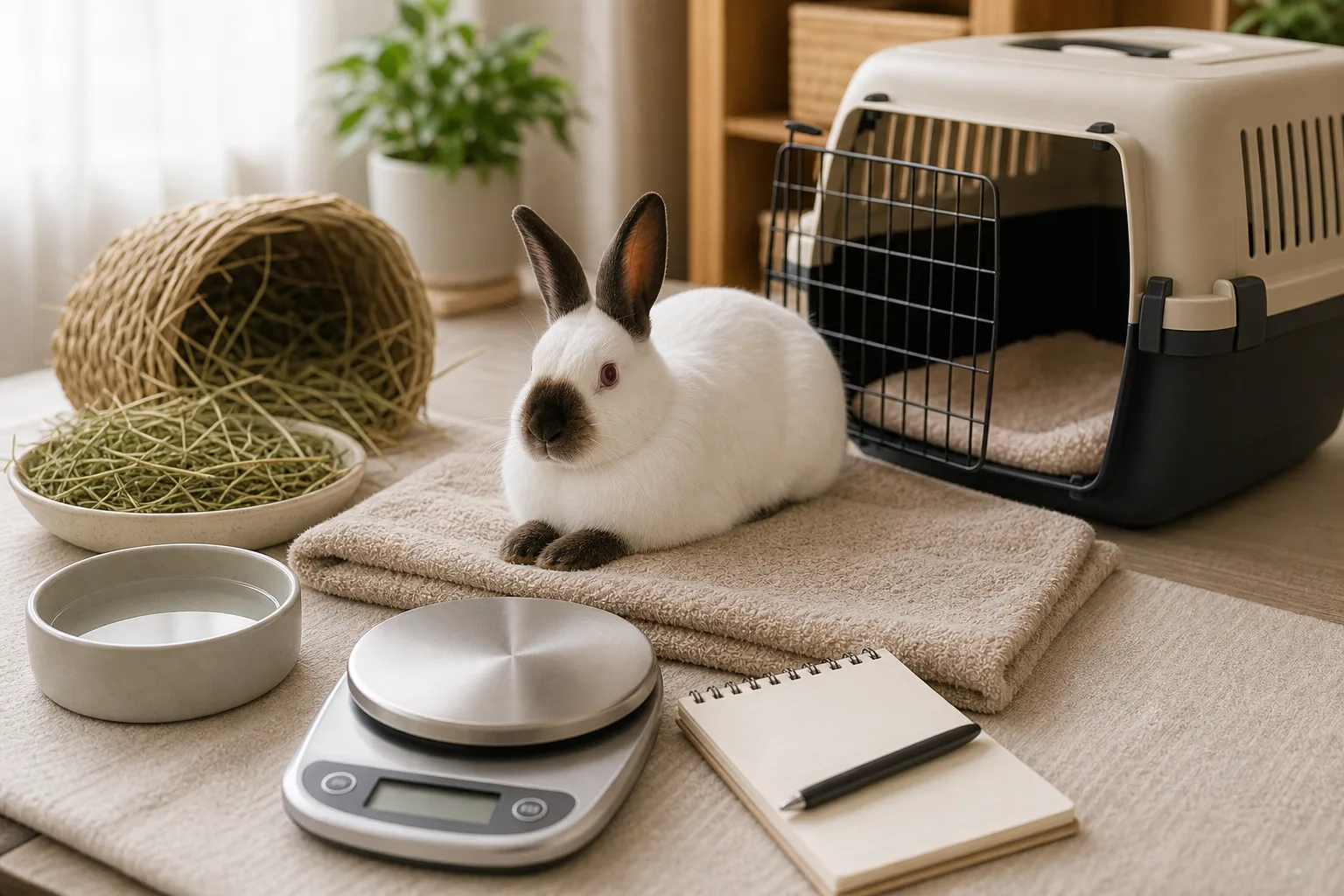
How to Prepare for a Rabbit Vet Visit
Make carrier practice, records, symptom notes, and travel logistics less stressful before the appointment.
Health & Safety
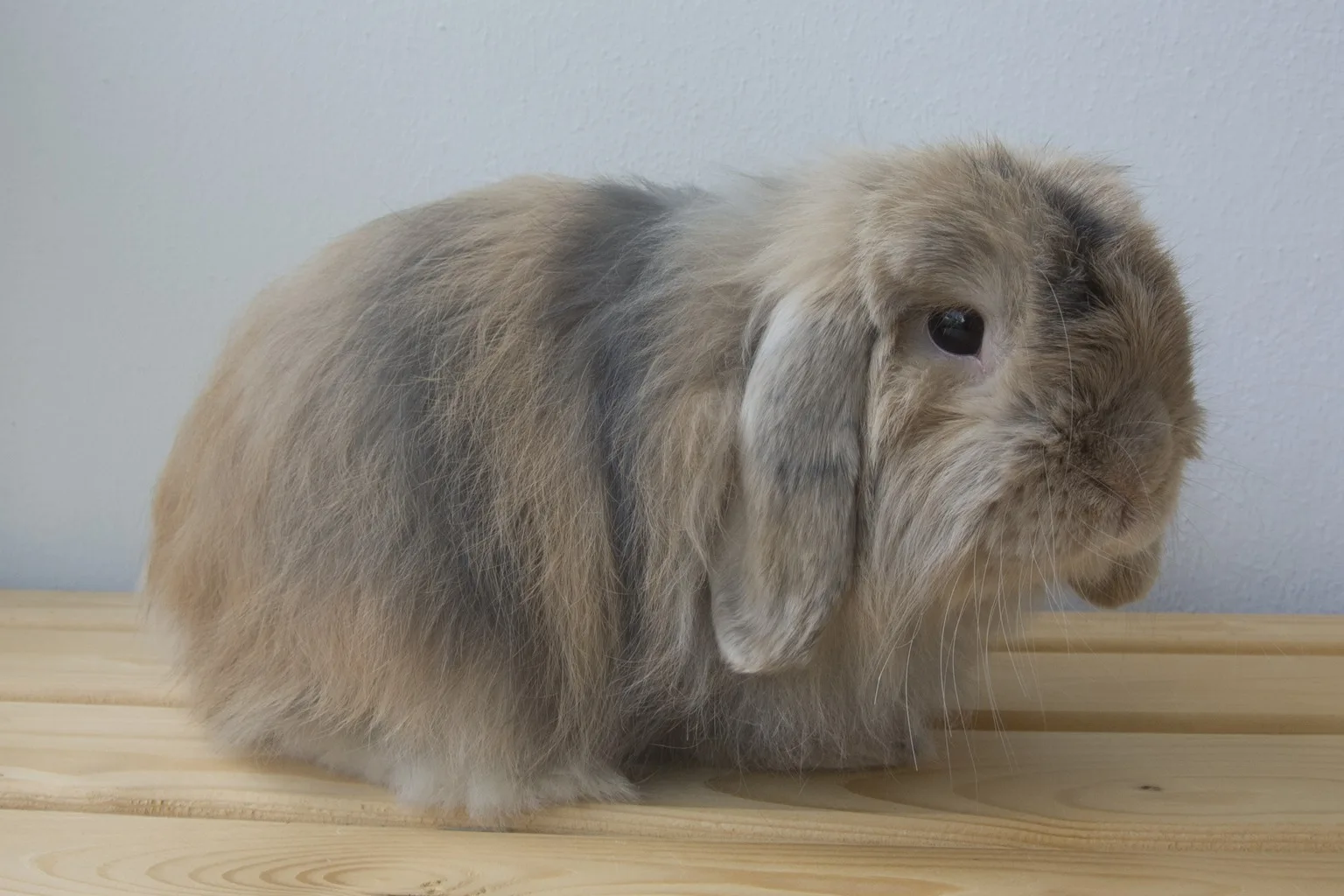
Mini Lop Rabbit: Breed Profile, Care, and the Truth About the Ears
Mini Lops are 6.5 lb lop-eared rabbits — and dropped ears carry a documented ear and dental health cost. Breed facts, daily care, and yearly checks.