Photo: Hugo Bayet via Wikimedia Commons, CC BY-SA 4.0.
How to read the photos in this guide
Every photo below is a real, licensed photograph of a live rabbit (source and license credited under each image), paired with the single signal the pose is showing. Read signals together — ears, eyes, nose, posture, and context — rather than one at a time. The Rabbit Body Language Basics guide explains the vocabulary; this page shows it.
Rabbit.org's classic "Rabbitspeake" essay makes the key point: rabbits mostly communicate through posture and action, and context decides meaning. The same physical pose can mean contentment or fear depending on what happened two seconds earlier, so treat each photo as a pattern, not a dictionary entry.
The signals, photographed
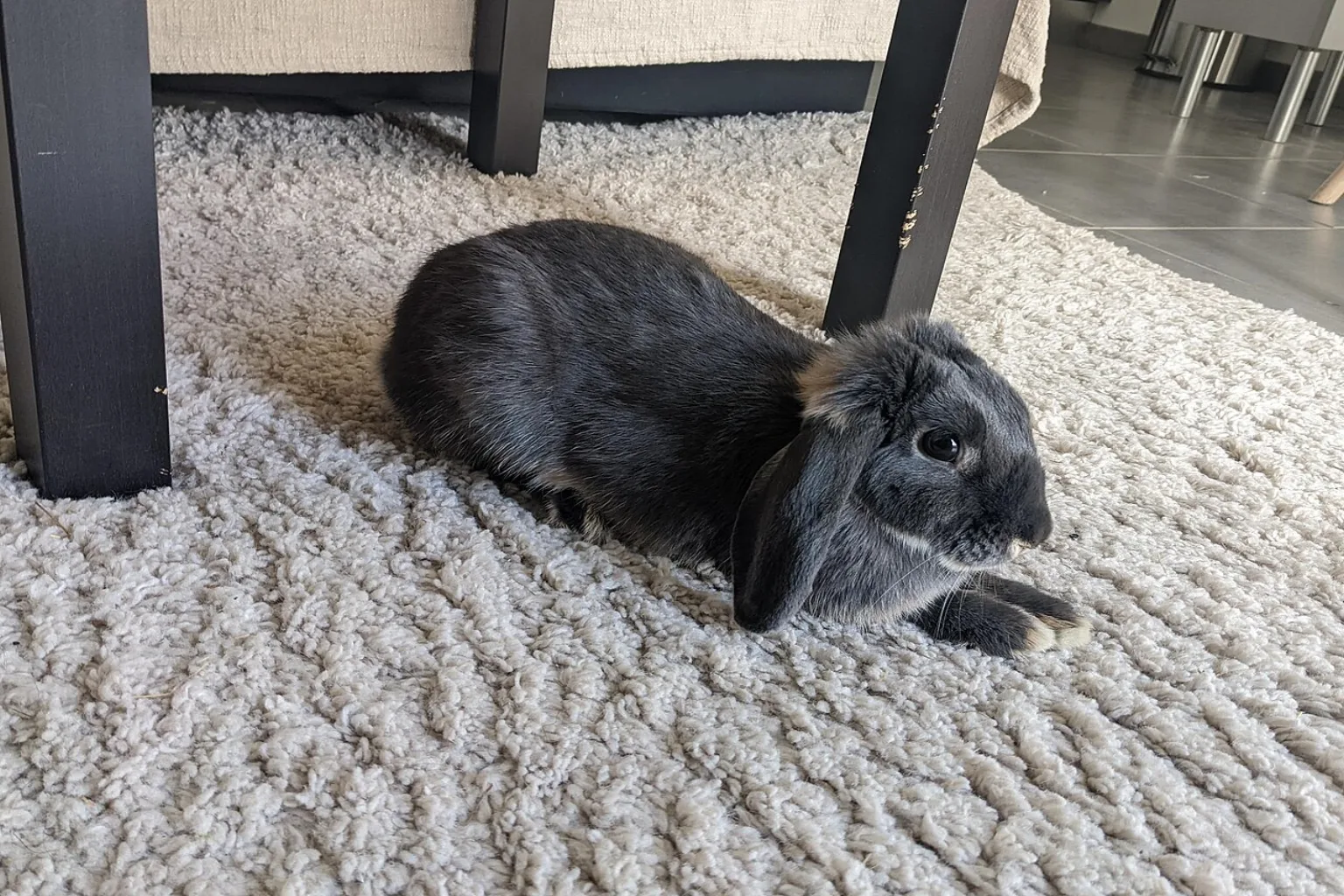
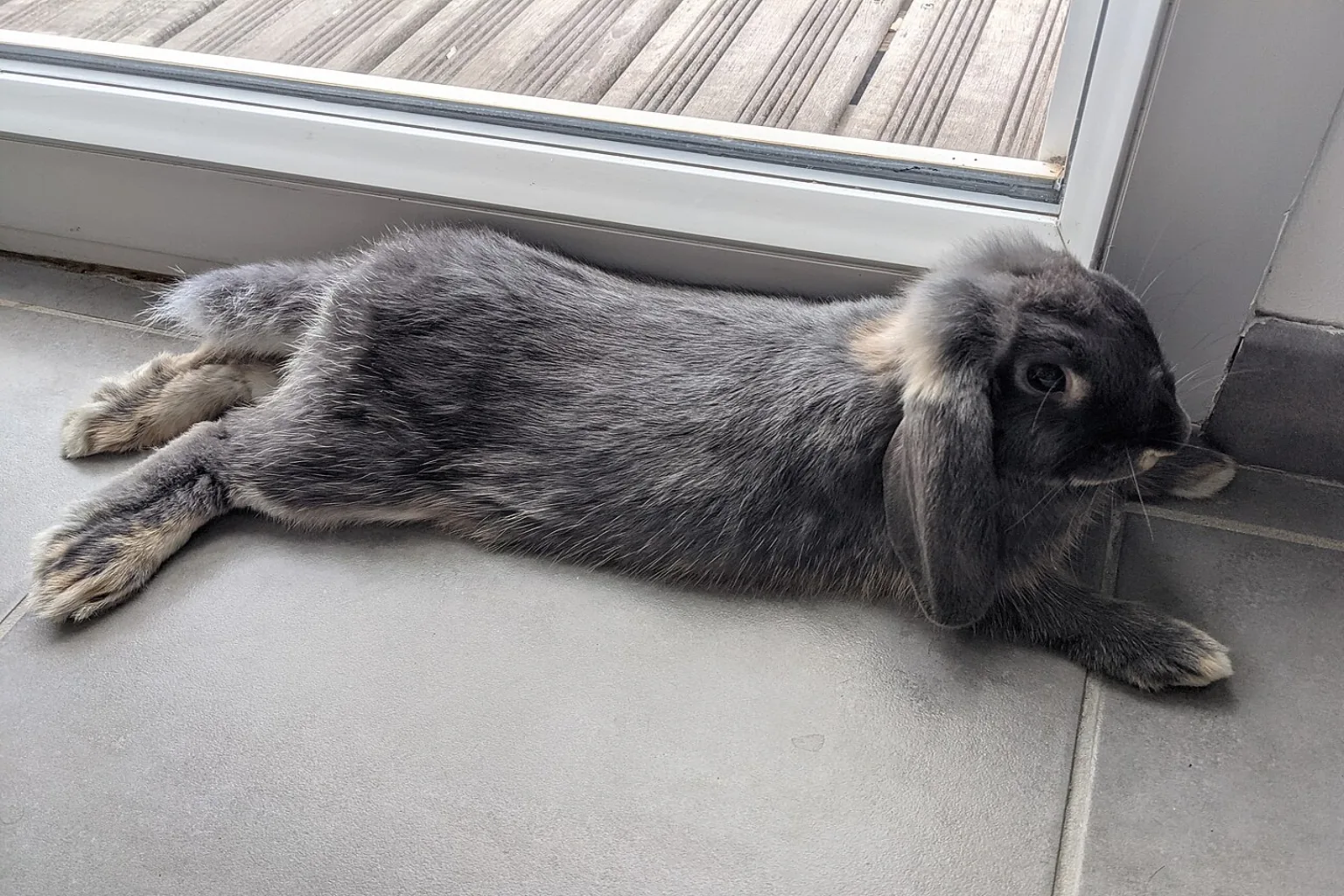
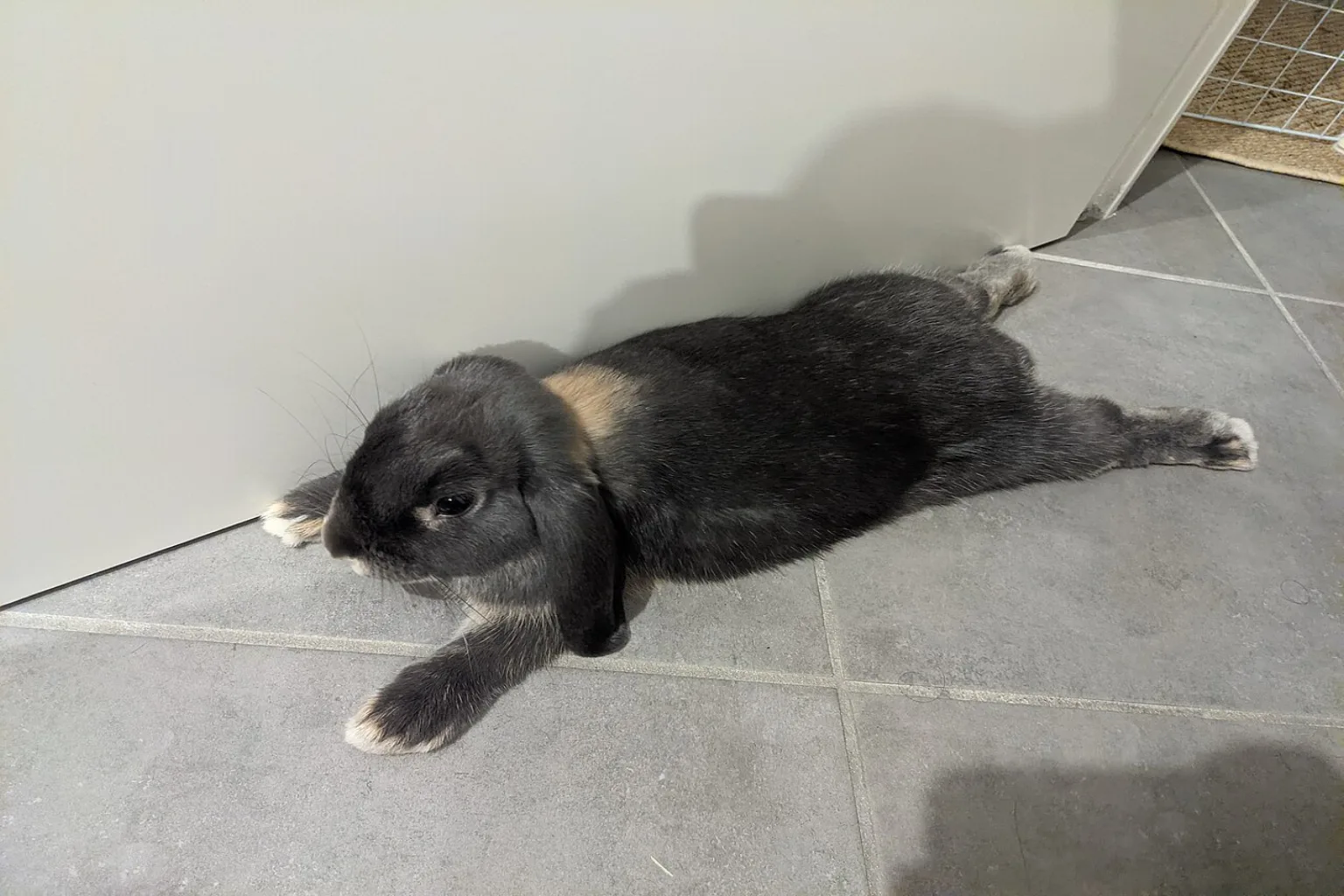
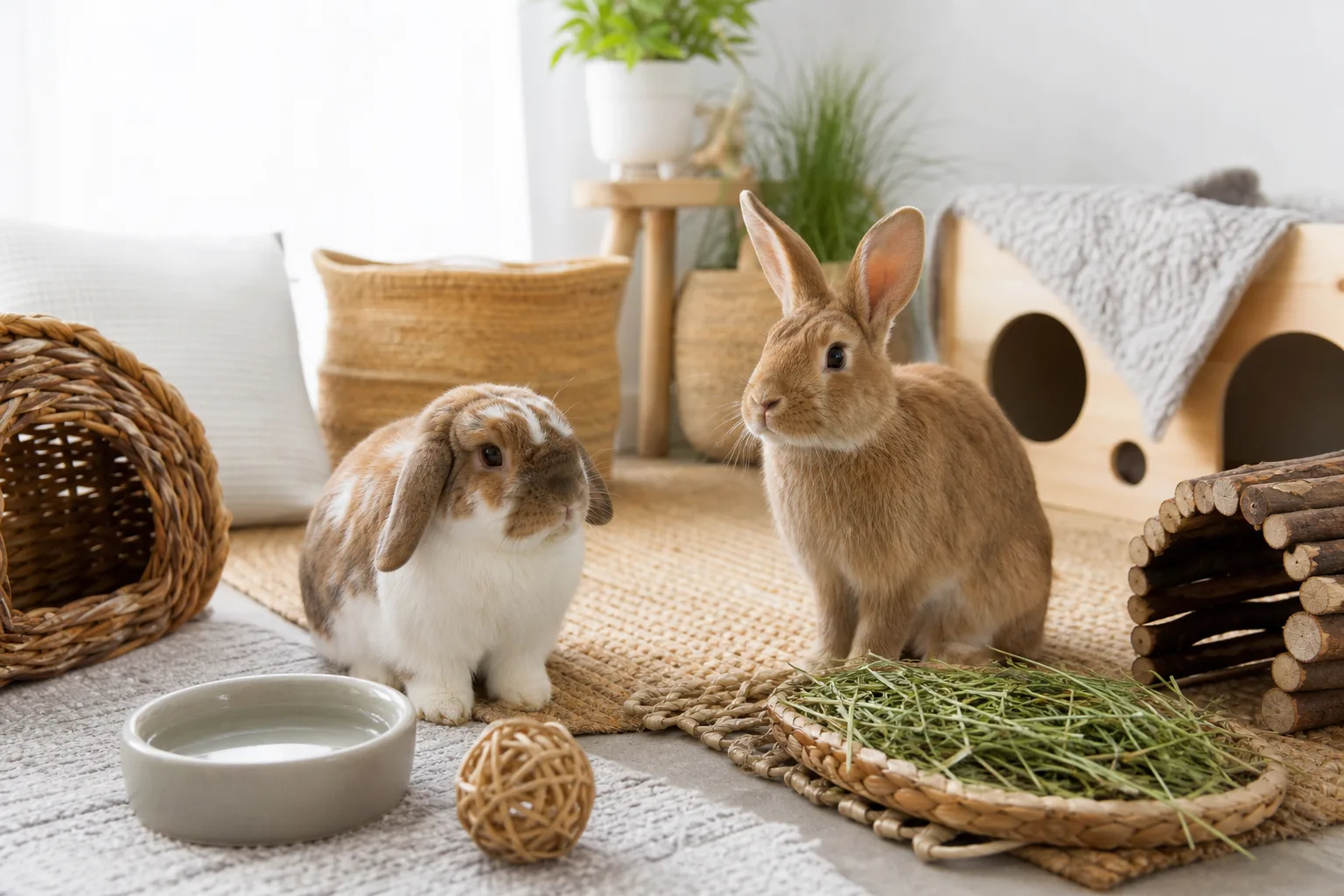
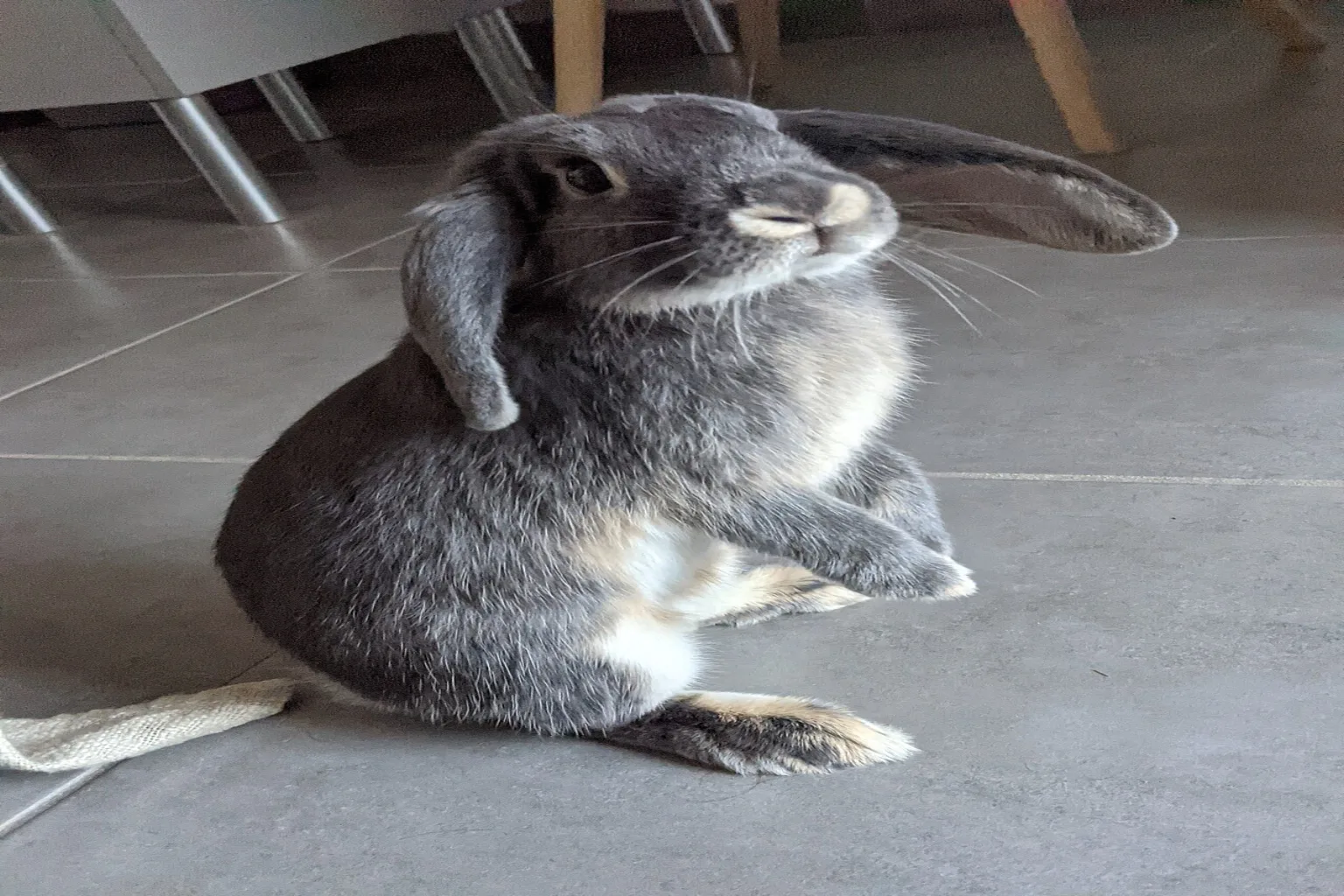
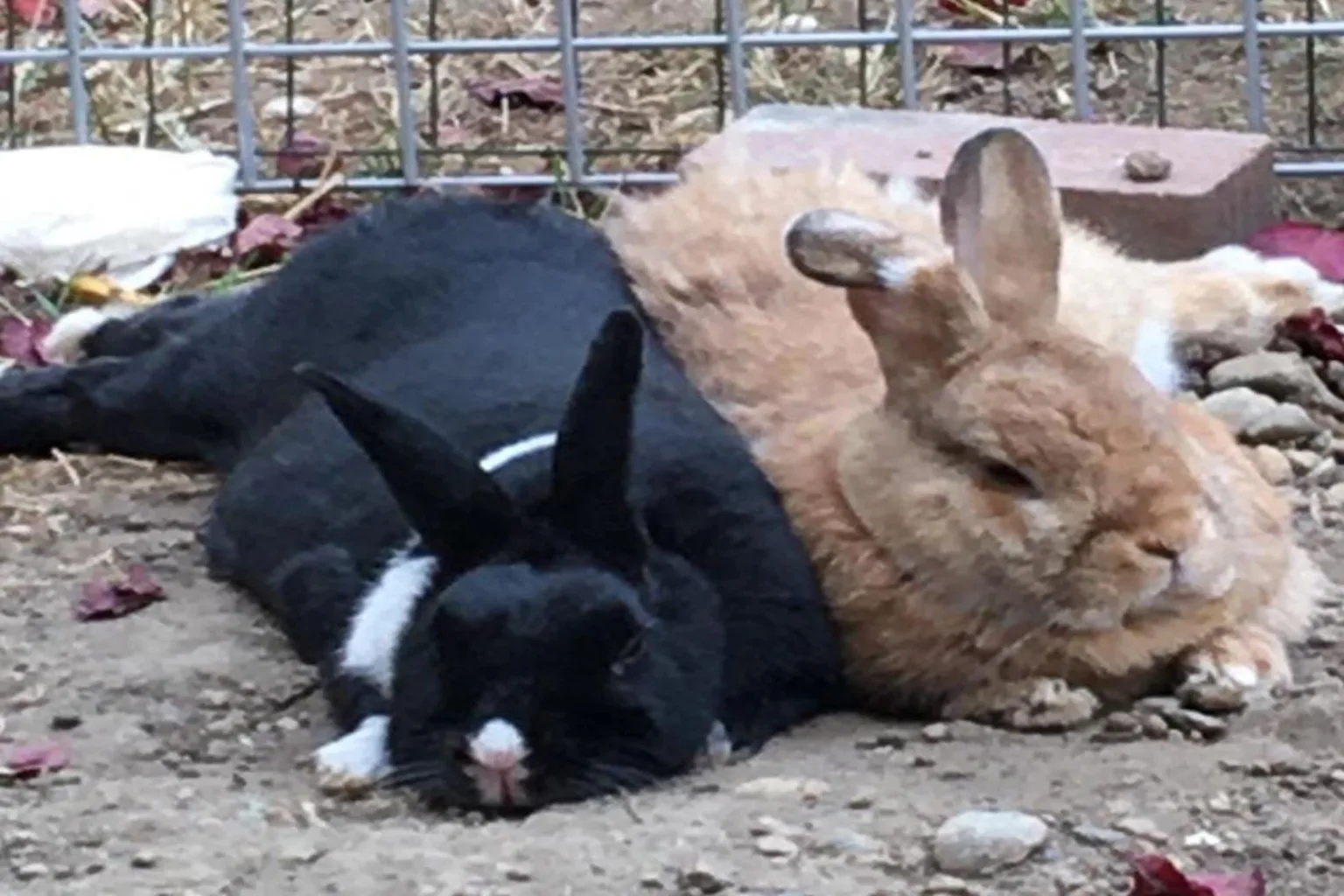
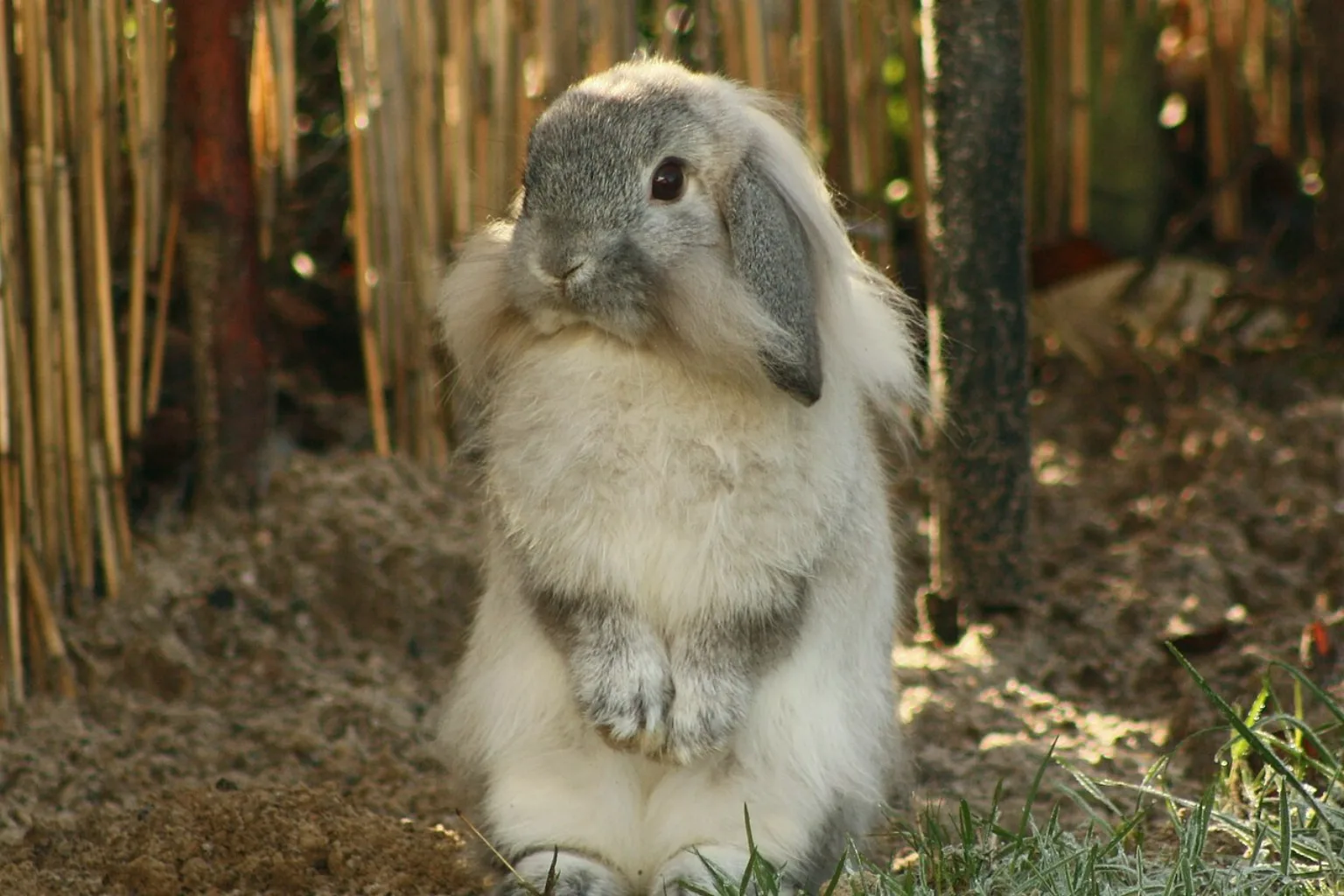
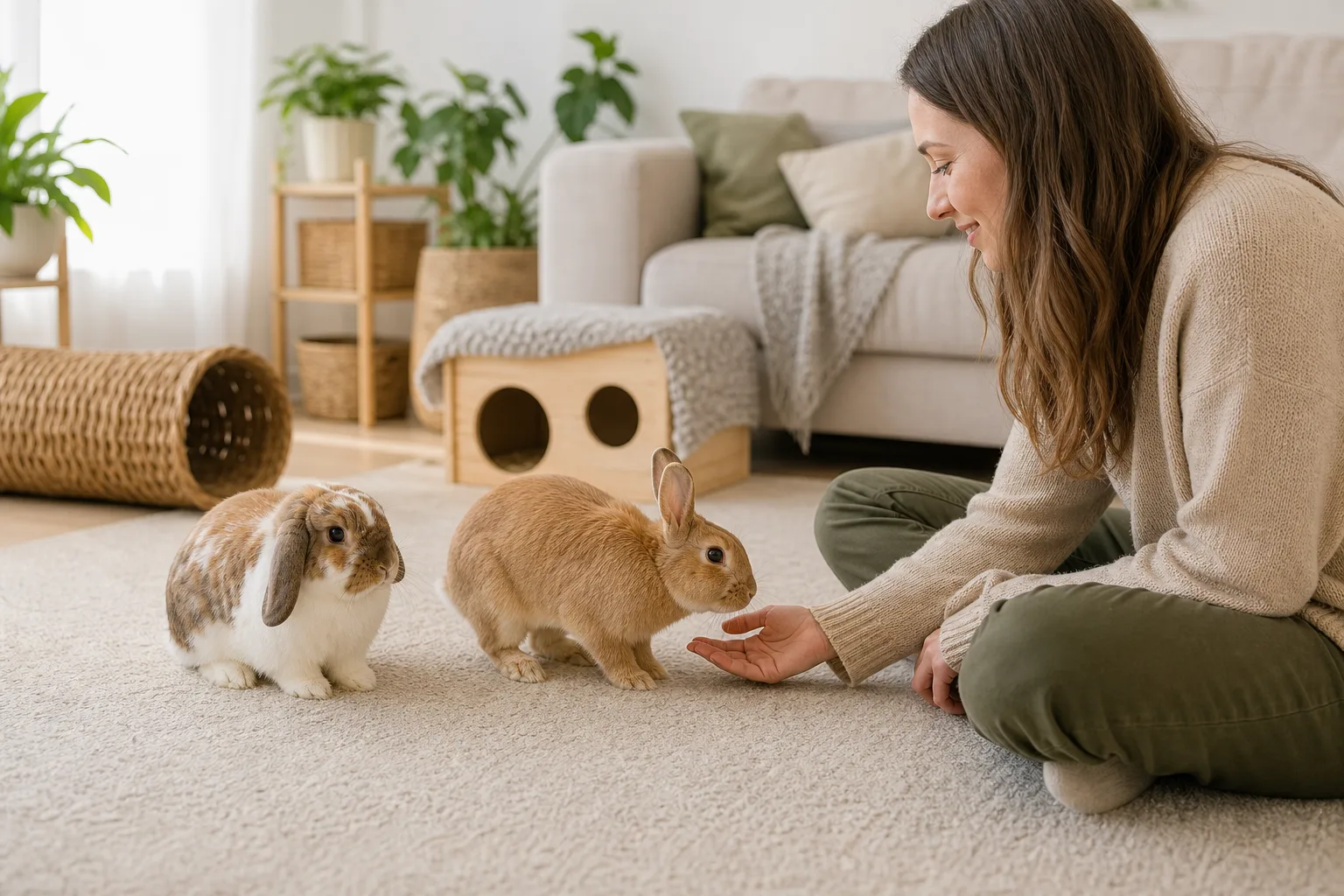
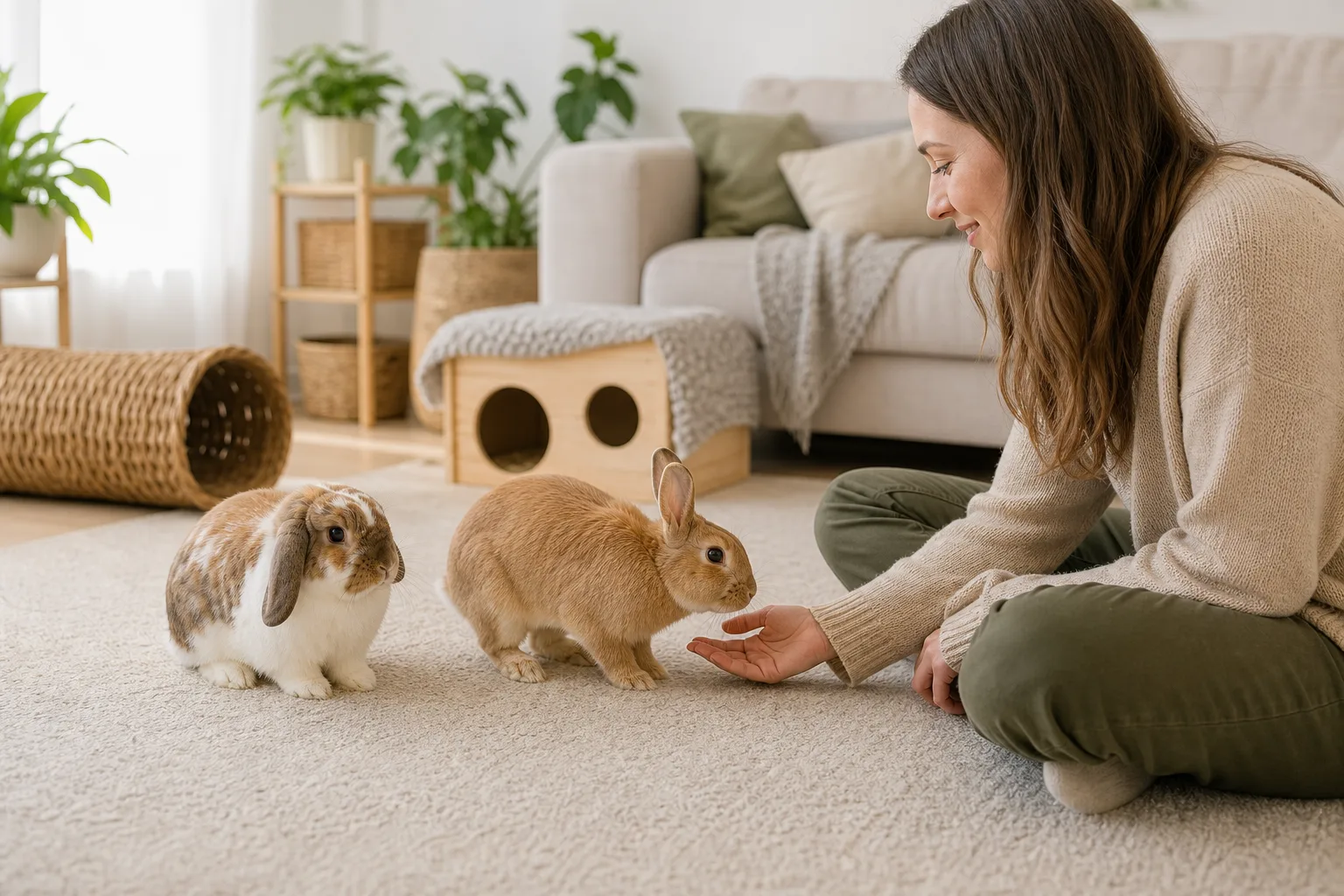
The loaf. A loaf is the compact rest pose: legs tucked fully underneath, ears soft, eyes calm or half-closed. Most rabbits loaf when they feel safe enough to switch off a little but not enough to flop completely. A rabbit that loafs near you is telling you the room feels predictable. Photo: Hugo Bayet via Wikimedia Commons, CC BY-SA 4.0.The side flop. The flop is the trust pose: the rabbit tips onto its side, sometimes with a small thump as it lands. New owners often mistake it for collapse. Look at the context — a rabbit that flopped after eating and stays breathing evenly is simply deeply relaxed. Rabbit.org describes the sideways flop with fluttering eyelids as contented sleep. Photo: Hugo Bayet via Wikimedia Commons, CC BY-SA 4.0.The full stretch. A full belly-down stretch with hind legs extended is the heat dump and the deep-rest signal. Rabbits stretch out on cool tile in warm rooms and after hard play. A rabbit that never full-stretches in your home may simply not have found a surface it trusts yet — try adding a mat to a tile floor. Photo: Orlica via Wikimedia Commons, Public domain.Relaxed loaf on carpet. Carpet loafs matter because flooring is part of the signal. Rabbits avoid stretching or flopping on slick floors; a rabbit that only loafs tightly on rugs but stretches on carpet is telling you traction, not mood, is the limiting factor. Soft running surfaces change body language within weeks. Photo: UsanaAngelou via Wikimedia Commons, CC BY-SA 4.0.Standing up (periscoping). Standing on the hind legs is curiosity, not demand. Rabbits perch to scan the room, check a new object, or reach for something you are holding. Ears forward and nose working means assessment; repeated periscoping at a door or gate usually means the rabbit wants access to a place it can hear. Photo: Hugo Bayet via Wikimedia Commons, CC BY-SA 4.0.Bonded pair resting together. Two rabbits resting sides touching, ears down, both loafing, is the single clearest sign of an established bond. Bonded pairs groom each other's faces and eyes, which they cannot reach alone. If a pair sits apart with ears pinned after previously resting together, treat it as a bond check-in, not a crisis — watch for chasing or pulling fur first. Photo: Kippo44 via Wikimedia Commons, CC BY-SA 4.0.Allogrooming (bonded grooming). Face-to-face grooming — often nose-to-nose so it looks like kissing — is allogrooming, the maintenance behavior that keeps bonded pairs' scent shared and their status even. It is also the posture where dominance disputes start: grooming that turns into head-humping or fur-pulling means the pair is renegotiating, and you should watch the next few minutes closely. Photo: KittensMittens2 via Wikimedia Commons, CC BY-SA 4.0.The alert sit. The alert sit is upright on all four feet, ears rotated toward the stimulus, tail visible. A rabbit in alert sit is not afraid yet — it is triangulating. Your job is to remove the stimulus or give the rabbit a hide to retreat to; forcing handling during alert-sit is how trust regressions start. Photo: Andreas Rühle via Wikimedia Commons, CC BY-SA 4.0.Curious but guarded. Guarded curiosity looks like approach-freeze-approach: the rabbit moves in two or three beats, stops, pulls one ear back, then continues. That pulled-back ear is the tells-you-everything signal — one ear monitoring behind while the other faces you. Offer a hand low and let the rabbit close the last few inches. Photo: Kiraface via Wikimedia Commons, CC BY-SA 4.0.Dawn activity (crepuscular pattern). Rabbits are crepuscular: their active windows are dawn and dusk. The binky-and-zoomie hour at sunrise is not a behavior problem — it is the species schedule meeting an indoor life. Plan floor time and feeding around those windows and most 'my rabbit is hyper at 6am' complaints solve themselves. Photo: Enoch Leung via Wikimedia Commons, CC BY-SA 2.0.Grazing focus. A grazing rabbit sits slightly back on its haunches, nose down, rhythmically pulling grass or hay. Grazing is the state where rabbits are most approachable — wild rabbits feed near their warren mates for safety. Sitting quietly beside a grazing rabbit is the fastest passive trust-builder there is. Photo: 金色黎明 via Wikimedia Commons, CC BY-SA 4.0.
When body language says "call the vet"
Body language reading has a hard safety edge: some poses are pain, not preference. Call a rabbit-savvy vet urgently if you see any of these:
Pressed flat with eyes half-shut and grinding. A painful rabbit presses its belly to the floor and stays tense — very different from a flop. Paired with not eating, this is a GI stasis pattern; see Rabbit Not Eating? Warning Signs.
Hunched sit with a puffed-up back. The "hunch" pose of a rabbit in abdominal pain. It does not respond to normal cues and may press its face into a corner.
Sudden aggression in a previously mellow rabbit. Pain rewrites temperament. A rabbit that starts thumping, boxing, or biting without an environmental cause needs a health check, not training.
Head tilt, circling, or rolling. Possible E. cuniculi or inner-ear disease — same-day care.
Reluctance to move, or moving stiffly. Sore hocks, arthritis, or injury; check foot pads during grooming sessions.
How to bond with a rabbit: a two-week floor-level plan, the consent signals that mean stop, safe places to touch, and when a behaviour change is medical.