
The short answer
When a rabbit is stressed, the fastest way to calm it is almost always the least physical one: reduce the trigger, give quiet space, and let the rabbit come back to normal on its own timetable. Rabbits are prey animals — their nervous system is built to treat anything new, loud, or grabby as a potential predator — so "soothing" by picking a scared rabbit up usually adds stress instead of removing it.
Some stress is unavoidable: car rides, vet visits, fireworks, building work, a new baby, a moved litter box. The skill is not preventing every spike; it is using the three levers you control — environment (quiet, hiding places, familiar smells), handling (low, slow, supported, on the floor), and routine (predictable feeding and cleaning, one change at a time).
Three quick rulings before the details:
- A hiding rabbit is managing its stress — leave it be. Tempt it out with food; do not tip out its hideout.
- A frozen rabbit is not a calm rabbit. A tense "flat" pose is a fear posture — and pain can look the same.
- Stress plus appetite or dropping changes is a health question. Rabbits hide illness; signs that persist need a vet's eyes.
What stress looks like in rabbits
Rabbits signal stress with their whole body, and the signals escalate. PDSA's behavior guidance groups the unhappy signs as flattened ears, a tense "down" crouch, a nose that stops twitching, moving or running away, hiding, and thumping. Learn the ladder so you can act at the mild end:
| Level | What you see | What it means | First move |
|---|---|---|---|
| Mild | Extra alert; ears half-back; still eating; tracking everything | Something changed and the rabbit is watching it | Remove the trigger if you can find it; keep your own movements calm |
| Moderate | Crouched "down" pose; hiding; nose not twitching; repeated thumping | The rabbit feels threatened and is avoiding the open | Quiet space, food at a distance, no handling, no chasing |
| Severe | Flattened and frozen; refuses food; growling, lunging, or teeth showing | Panic-level fear — or pain wearing fear's costume | Remove the stressor, provide a covered hide, and call a rabbit-savvy vet if it does not settle within hours |

One diagnostic habit beats everything: know your rabbit's normal. A rabbit that greets the morning and eats in bursts all day is telling you everything by how THAT pattern changes — more than any single pose can.
Why rabbits stress so easily
Every quirk on the ladder comes from the same design brief: rabbits are small, edible, and fast, and the ones that assumed every shadow was a predator survived to pass the habit on. In practice that means:
- New = dangerous. Unfamiliar sounds, smells, objects, and animals read as threats until proven safe — including "nice" surprises like a new toy.
- Off the ground = caught. Lifting mimics what a predator does, which is why carrier practice and floor-level handling matter so much.
- Noise lands harder. Rabbit hearing is tuned to sudden, high sounds — a dropped pan or a firework is a far bigger event to your rabbit than to you.
- They hide problems. A rabbit that looks "a bit quiet" may be working hard to look normal. Behavior change is the diagnostic channel.
None of this means a rabbit cannot be confident and relaxed; it means calm is built through familiarity and routine — never through force.
Calming a rabbit in the car
Car travel stacks almost every rabbit stressor at once: motion, noise, an off-ground view, an unfamiliar box, and usually a destination that is itself scary. The RSPCA's guidance starts with the honest rule: only transport rabbits when it is necessary, and pick the closest rabbit-savvy option when you must travel.
When a trip is happening, the setup decides most of the outcome:
- Make the carrier boring and familiar. Leave it open in the rabbit's area for days beforehand, with greens or a treat inside now and then — the House Rabbit Society's handling guide uses exactly this, plus a treat trained to the sound of a shaken container.
- Line it with things from home. A handful of unsoiled bedding or a familiar-smelling item helps, and hay both cushions and entertains.
- Partially cover the carrier. The RSPCA suggests blocking bright light or headlights with a cover — while keeping ventilation open.
- Secure it and mind the temperature. Strap the carrier in or place it in a footwell; never a hot trunk. The compartment must stay cool and ventilated.
- Companions travel together. If your rabbit lives with a partner, take both — the RSPCA notes separation from a bonded rabbit is its own stress, and reunions after separation get harder.
- Reward eating on the way. Keep a favorite healthy food handy as encouragement; a rabbit that eats en route is telling you the trip is tolerable.

Calming a rabbit at the vet
A vet visit is a car ride plus strangers plus handling, so everything above applies — plus a few clinic-specific habits. Keep the carrier covered in the waiting room and on your lap rather than the floor beside curious dogs; ask the front desk for a quieter spot for a nervous rabbit; and bring notes (what changed, when, appetite, droppings, weight) so the exam is efficient and the handling brief.
Afterward, plan a quiet homecoming: dim light, hay, water, and no new introductions that day. Most rabbits shake off a routine visit within hours; a rabbit still refusing food the next morning has crossed from stressed into "call the vet". Prep details live in our vet-visit preparation guide, and the red-flag signs are mapped in the GI stasis guide.
Loud noises and household disruption
Fireworks, thunderstorms, builders, a new baby, a moved room — the shape of the fix is the same every time: give the rabbit a burrow, keep your own behavior boring, and protect as much routine as possible.
- Offer covered hiding places. Boxes with two exits, tunnels, and a covered pen corner hand the rabbit back some control — control is what turns fear down.
- Serve food to the hideout. If the rabbit hides, place hay, water, and greens within reach so it can eat without crossing open ground.
- Think twice about relocating. Moving a rabbit to "the quiet room" can be more disruptive than the noise itself; keeping it on familiar ground usually wins.
- Keep the routine's skeleton intact. Same feeding and cleaning times, same voice, same order of events. Predictability is a stress buffer, and it is free.
Low-stress handling that builds trust
Handling is not automatically stressful — unskilled handling is. The House Rabbit Society is blunt about two things: rabbits can seriously injure their own spines trying to escape a bad lift, so support the back and hindquarters correctly, and a struggling rabbit should never be lifted against its will.
What low-stress handling looks like in practice:
- Work at floor level when you can. Petting, grooming checks, and even nail practice can happen on the ground with the rabbit's feet under it.
- Use the calm-before-pickup signal. The HRS describes stroking gently between the eyes until the rabbit relaxes before any lift — a short pause, not a chase.
- Support everything that matters. One hand under the chest, one under the rump, rabbit held against your body — the football and C-holds exist for exactly this reason.
- Wrap for logistics, not for cuddles. The towel "burrito" is a tool for loading a determinedly uncooperative rabbit into a carrier — not a daily handling method.
- Never trance. The "hypnotized" on-the-back pose is tonic immobility — a fear-freeze with a racing heart and a stress-hormone surge. HRS asks owners to retire the trick entirely: it teaches a rabbit that hands mean helplessness.
- End on success. Two calm seconds and a release beat a long session. Trust is built in repetitions, not endurance.
When it is not just stress
Stress and sickness wear the same costume. A hunched, hiding, food-refusing rabbit is describing a stomach ache as often as a bad day — and PDSA's rule fits: any unexplained behavior change deserves a vet look, because rabbits are too good at hiding illness to gamble on wait-and-see.
Call a rabbit-savvy vet (today) if stress signs come with any of these: no food or almost no droppings for 12 hours, smaller or misshapen droppings, belly pressing or loud teeth grinding, sudden aggression from a friendly rabbit, head tilt, labored breathing, or a rabbit that will not move out of a corner. The stasis guide explains why the first 12 hours matter, and the not-eating checklist walks through exactly what to observe and report.
Everyday habits that keep stress low
The rabbit that copes best with the spiky days is the rabbit whose ordinary days are structured. The habits that pay off:
- Same rhythm daily. Feeding, cleaning, and social time at predictable points. Rabbits measure safety in patterns.
- Never a solo rabbit. PDSA states plainly that rabbits should never be kept alone — a bonded partner is the single biggest calm-buffer you can install. See bonding with your rabbit and adopting two rabbits.
- Enrichment as a daily habit. Foraging, digging, and chewing work give the nervous system somewhere useful to land. Rotate toys and boxes weekly.
- Slow introductions, always. New pets, new people, new rooms — one change at a time, from a distance, on the rabbit's schedule.
- Handle-proof your calm days. Practice carrier and handling skills when nothing is at stake, so emergency days are boring. The care checklist and behavior decoder keep the basics honest.
Read the ladder, lower the pressure, and let time do the calming: a rabbit that hides today because the doorbell rang will be back to binkying tomorrow — as long as the environment lets it be a rabbit again.
Related resources
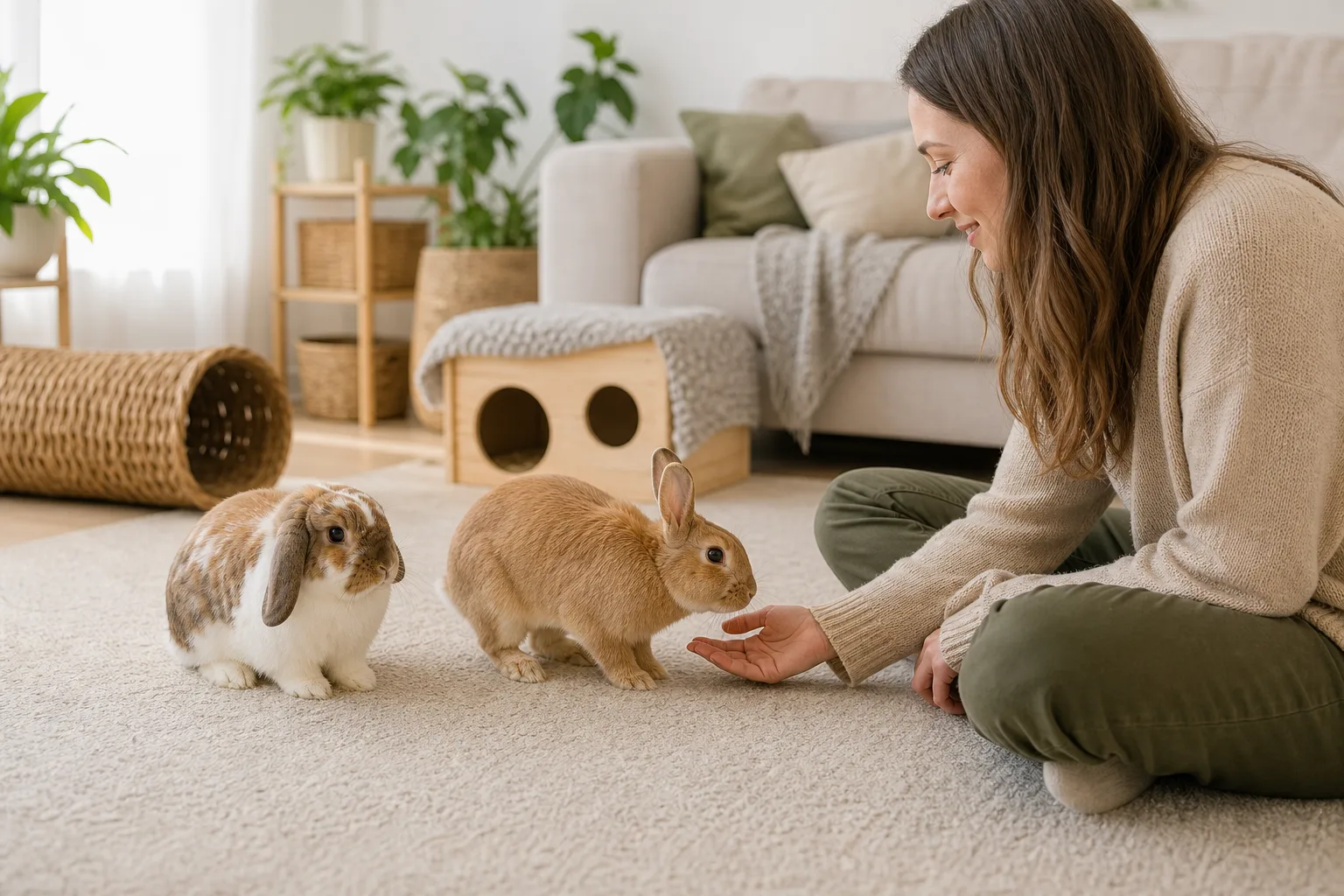
Behavior & Bonding
Bonding With Your Rabbit: Build Trust Without Forcing Cuddles
Learn quiet routines, floor-level interaction, treat timing, consent signals, and realistic expectations for affectionate rabbits.
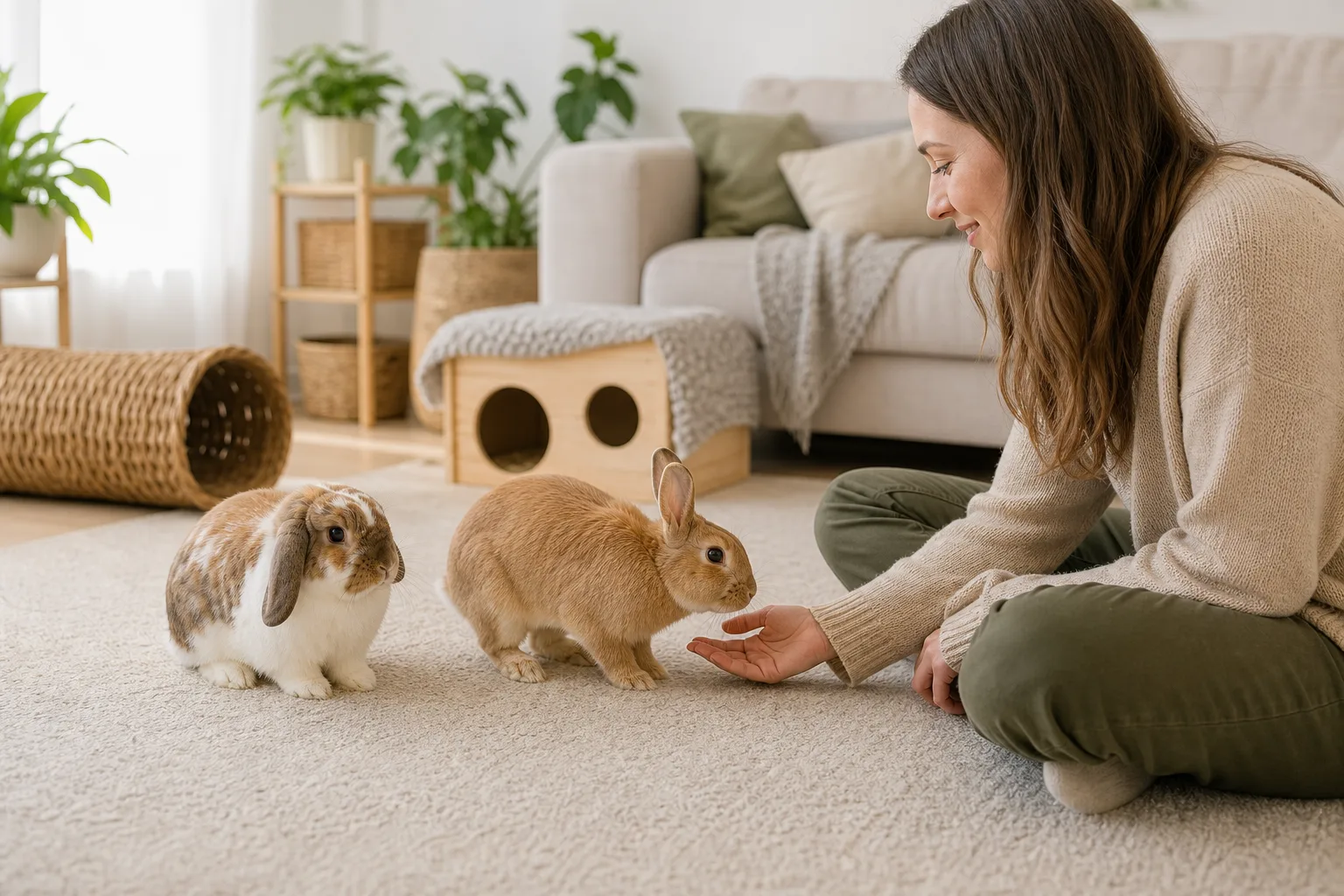
Behavior & Bonding
Rabbit Body Language Basics: Binkies, Loafs, Thumps, and Trust
Read common rabbit signals so you can tell relaxation, curiosity, fear, irritation, and possible pain apart.

Behavior & Bonding
Rabbit Body Language With Pictures: 11 Real Photos Decoded
Real licensed photos of rabbit loafing, flopping, periscoping, grooming, and bonding, each decoded with the exact signal it shows.
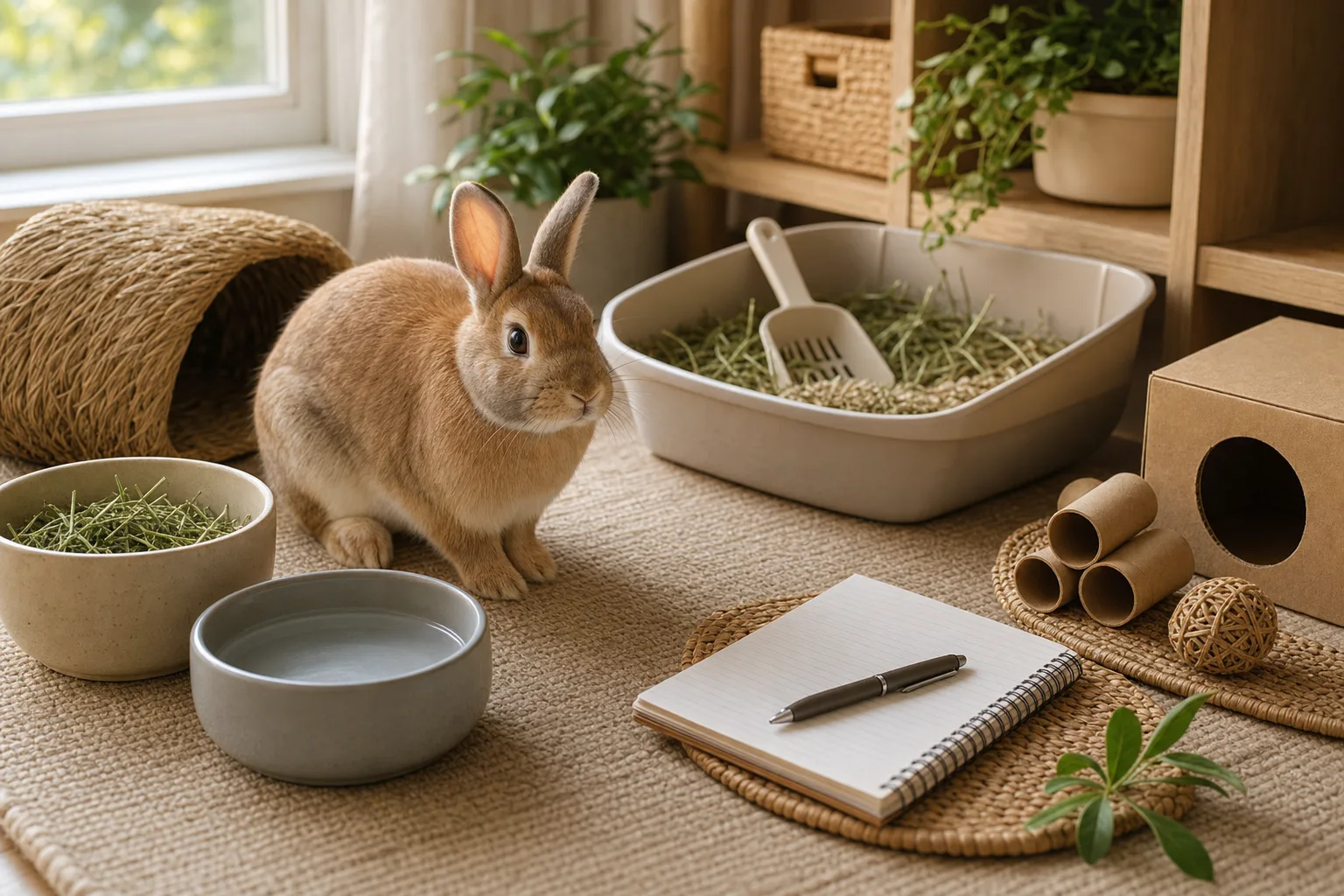
Behavior & Bonding
Adopting Two Rabbits: Companionship, Bonding, and Practical Prep
Decide whether a bonded pair fits your home, budget, space, and care routine before adoption day.